Author: stephane schlesinger

  • The DS, a fifty-year-old goddess, part I

    The DS, a fifty-year-old goddess, part I

    Citroen_ds_19 Yes, the DS is nearly fifty. It appeared at the Paris Motor Show, on October 6, 1955. Drawn by Flaminio Bertoni, the DS astonished everybody: it was 20 years ahead. Everything about this car sent its rivals to the museum: hydro-pneumatic suspension, front disc brakes, front wheel-drive, hydraulic gear change, intense use of plastic and aluminium and a splendid streamlined body. The engineers, ruled by André Lefebvre, had been summoned to give the best of themselves. Special congratulations to Paul Magès, for designing the whole hydraulic system.

    On the other hand, the engine was inherited from the Traction, and even if Walter Becchia had endowed it with a new top, the DS would always lack the flat-6 once planned for the top-of-the-range Citroen. The company was simply short of money to achieve its development.

    The public was more than enthusiastic: on the first day, 12,201 orders were placed. At the end of the show, this figure rose to 79,996! Even if the DS reached new technoligical summits, it remained affordable.

    Citroen was both delighted and embarrassed: only 8 copies had been made hitherto. If fact, the car was still a prototype and the first customers underwent appalling reliability problems. It took Citroen a few years to solve them: by the time, the DS had acquired a dubious reputation…

    But then, the company constantly improved and developed its goddess on wheels. 1958 saw the introduction of a simplified DS called ID, which was declined in an estate body (Safari)the following year. In 1960, the convertible came out in the Paris Motorshow. In 1961, the engine was modified and saw its power rise from 75 to 83bhp.

    In 1964, the luxurious Pallas trim was introduced and in 1965, the old 1911 cc unit was deeply modified (on the DS only). It received a 5-bearing crankshaft and its capacity rose. From then on available in 1985 cc 90bhp and 2175 cc 109bhpversions, it allowed the DS to jump into the highway age with ease and elegance, helped by a new 5-speed gearbox.

    It still had no real competitor: the Rover P6, the Peugeot 404, the Vauxhall Cresta, the Mercedes 220, all of them were left far behind in terms of comfort, roadholding or braking power.
  • The DS, a fifty-year-old goddess, part II

    The DS, a fifty-year-old goddess, part II

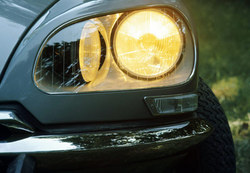
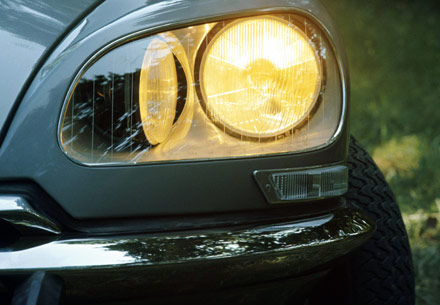
    Ds_lamp Bertoni died in 1963, but he had had time to draw a new front end for the DS. It came out in 1967, and once again, the audience was amazed. 4 headlamps took place under a glass panel, conferring the big Citroen an aggressive look. The central 2 lamps rotated the same direction as the wheels and in the mean time, automatically adjusted to the height of the car.

    In 1969, a new “safety” dashboard took place in the cockpit and an electronic injection was adapted to the DS 21, which then developed up to 130bhp.

    The ID 19 was replaced by the DSpecial and the ID 20 by the DSuper.

    In 1971, the 2175 cc engine evolved to 2347 cc, and its power rose to 115bhp if alimented by a carburettor or 139bhp with the electronic injection, allowing the DS to reach a top speed of 118 mph. What a contrast with the 90 mph of the 1955 DS 19!The 2175 cc engine did not disappear though, and was mounted in a new DSuper5 instead.

    In the same year, the production of the refined cabriolet ceased.

    In 1973, the production ceased in Paris and was transferred to Aulnay-Sous-Bois, on a new assembly line designed for the CX, launched the following year

    In 1974, the businessman-intended DS Prestige Pallas disappeared.

    On April 24, 1975, the last DS sedan, a blue 23 Pallas, rolled out of the factory, it was the 1,330,755th made in France.

    If we add the copies made abroad (in Slough, UK, for example, or Forest, Belgium), the figure rises to 1,455,746. Neither the CX (even if it sold honourably) nor the XM (a real failure) were able to reproduce the dazzling success of the DS, and I don’t think the future C6 will.

    Even after 20 years, the DS remained out of reach in terms handling and ride and dynamic safety. Besides, its 0.36 cz drag coefficient was still unsurpassed, even by the CX.

    But what remains of this car, beyond its charisma and its unique character, is the flavour of the dream.

    Those who had designed it did not care of silly marketing laws, they just wanted to make their dreams come true.

  • Audi Q7, for rich Tuaregs

    Audi Q7, for rich Tuaregs

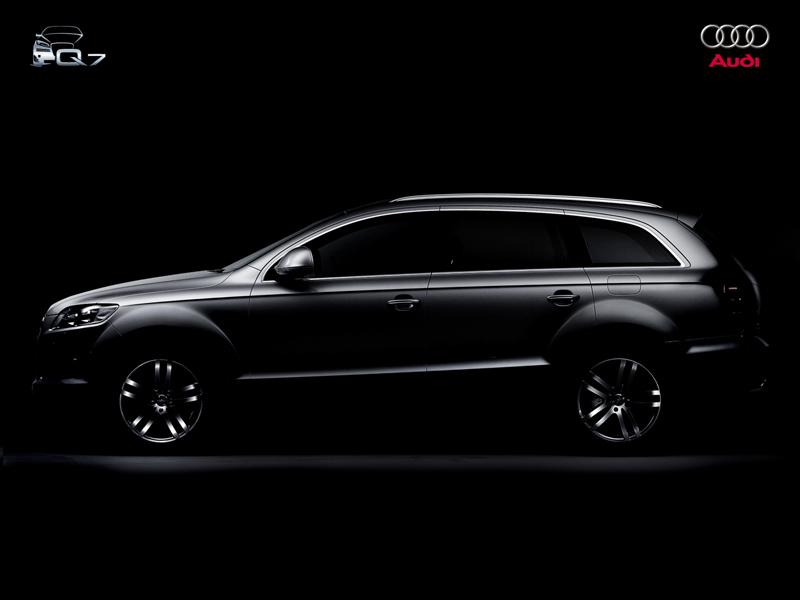
    Audi_q7 Audi had given a hint of its new SUV 2 years ago, with a concept car called Pike’s Peak. The definitive version, called Q7, will be presented at the Frankfurt Motor Show, in October.

    Offering accommodation for 7 people, this 4.85-meter long SUV, drawn by Walter De Silva, will compete with the BMW X5, Mercedes ML, Lexus RX 300, Range Rover and Volkswagen Touareg, with which it will share its platform.

    The Q7 should be powered by the well-known 3.2 V6, 4.2 V8, and 5.0 V10 TDI. A twin-turbo evolution of the 4.2 seems to be underway, and it might develop about 500bhp.

    To avoid direct competition with the Touareg, the big Audi will be more expensive, with a basic price of £32,000 at least, and more refined.

    Audi intends to sell the Q7 in the US mainly – the biggest market for SUVs– and will launch it there early 2007.

  • A welcoming Cayman

    A welcoming Cayman

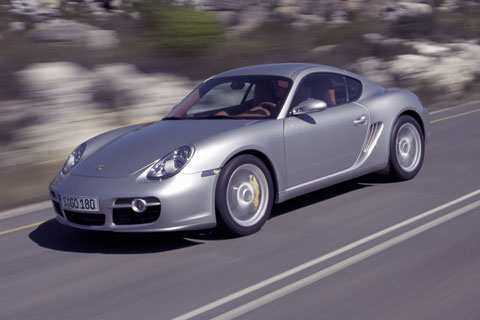
    Cayman Derived from the Boxster, the Cayman is meant by Porsche to reach a wider audience. To do so, the Stuttgart-based carmaker has paid great attention to practicality, fitting its new car with 2 boots, the total capacity of which is claimed to be more important than a BMW 330i’s.

    Weighing the same as a Boxster S or so, the Cayman S is propelled by a 3.4-liter flat-six cylinder engine producing 295bhp and 250 lb-ft, allowing it to reach a top speed of 171 mph and accelerate from 0 to 60 mph in 5.1 sec, with the standard manual 6-gear box. With the optional Tiptronic transmission, it’ll take 0.7 sec more.

    Standard equipment includes a PSM stability control system and 18-inch wheels, whereas 19-inch wheels, PASM damping system and Ceramic brakes remain optional. If fitted with these last 3 items, the Cayman S is said to be faster around a track than a 911.

    The Cayman S will go on sale in the UK on November 26 at a basic price of £43,930. Cheaper versions should come later.

  • Renault Clio III

    Renault Clio III

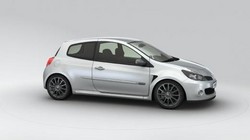
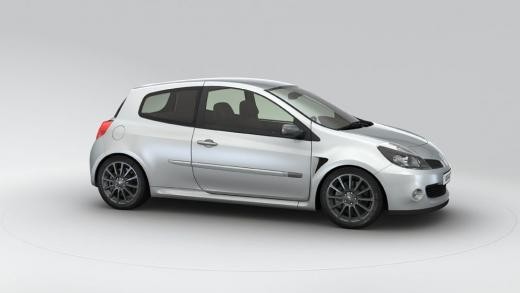
    Clio_rs In September, Renault will present the achievement of the X 85 program, i.e. the new Clio. Sharing its platform with the Nissan Micra, this new supermini will be built in Renault’s Turkish plant of Bursa, for which the French carmaker has invested € 216 million.

    With a 15-centimeter increased length, the Clio III should provide a slightly better accommodation than its predecessor. Renault targeting a 5-star score at the EuroNcap, a part of this increase will be dedicated to shock-absorbing zones.

    As a consequence, the Clio III will be heavier. To cope with this, more powerful engines are planned. The weak 1.2 8V must disappear while the 1.5 dCi’s power will rise up to 110bhp and the 1.6’s to 115bhp. Besides, a new 143bhp block is to be introduced.

    To crown it all, an RS version fitted with a turbocharged 2.0-litre 200bhp engine coupled with a 6-speed gearbox should be launched in the mean time (see our picture).

    Following Peugeot’s example, Renault has decided to endow the Clio with a foldable hard-top late 2007.

    We can expect nice fights in the supermini category, for the new Clio, Punto, Corsa and 207 will all be presented in a few months’ time.

  • Logan, the low-cost Renault

    Logan, the low-cost Renault

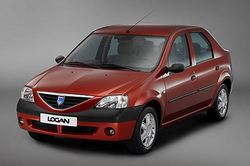
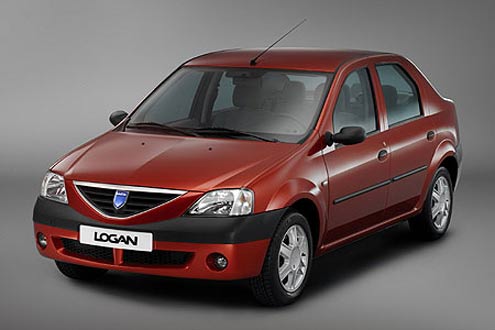
    Renault_logan A modern brand-new car for £5,500? Renault has made it possible with the Logan, built in Romania by Dacia, in a first time.

    Initially designed for emergent markets only, this 3-box sedan eventually arrives in Western Europe : Renault had not expected the public to be so interested in such a basic car.

    Don’t expect to find any trace of luxury in the cockpit. There is no power windows, no glove box, the door panels are made of a single plastic piece, the seats roughly trimmed, and the carpet is ultra thin. All this may look cheap, it remains solidly assembled. Besides, the accomodation is better than a Megane’s!

    Technically speaking, the Logan is not an antique. It uses the same platform as the future Clio, and in western Europe, the front suspension will receive an anti-roll bar.

    On the road, you are amazed at how comfortable the suspension is, but it’s impossible to forget the engine noise. Even if the steering is heavy, the car remains easy to drive, its road holding being very safe.

    The 75bhp 1.4 engine provides decent acceleration, but nothing more.

    Deprived of a power steering, but fitted with ABS brakes and 2 airbags, the entry level Logan should be available for £5,500 in 2007. Even if the fleet-market will find this offer astonishing, don’t forget that for the same price, any second-hand Golf, Megane or Corolla offers a better value for money along with a higher safety level. The Logan was credited 3 stars only by the EuroNcap.

  • Exelero is a Maybach, not an F-117

    Exelero is a Maybach, not an F-117

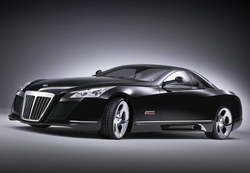
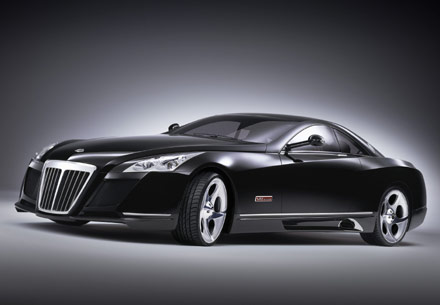
    Maybach_exelero Maybach has developed this 5890-mm-long coupe for the German tyre maker Fulda, which intends to use it as a “reference vehicle” for its new generation of tyres.

    Notwithstanding its 2.5 tons, this stealth bomber styled weird car, powered by a V12 developing 690bhp was able to reach 218 mph on the Nardo track.

    Don’t be afraid : it carries no bomb and will remain a one-off.

  • Don’t call Mazda 5 an MPV!

    Don’t call Mazda 5 an MPV!

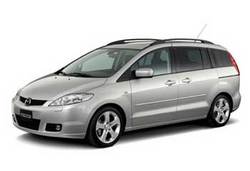
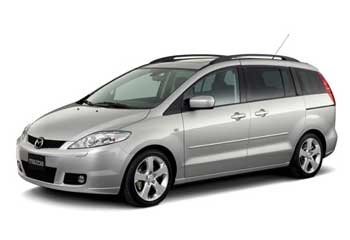
    Mazda5 Mazda’s new MAV is now available in the UK. This time, the Hiroshima-based carmaker hopes more than a succès d’estime. Mazda has gathered all the components to succeed in this range, having for example stylishly designed the body and fitted it with 2 sliding doors, which is a one of a kind feature on a MAV.

    2 petrol engines, a 1.8 and a 2.0 litres giving respectively 115 and 145b^hp as well as a 2.0 litres diesel engine, developing either 110 or 143bhp, are available. Strangely enough, the latter is not provided by Ford, which owns 50% of Mazda.

    Prices start at a competitive £14,097 for the 1.8 TS, the most expensive version being the 2.0 Sport Diesel (143bhp), sold £17,900.

    However, comfort is another key element for success, and the last 3 and 6 show this is not Mazda’s forte…

  • Peugeot 207 not unveiled before Januray 2006

    Peugeot 207 not unveiled before Januray 2006

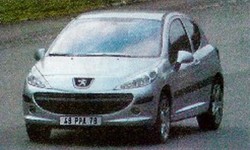
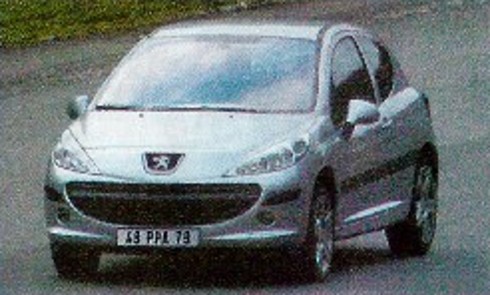
    207_spy A few 207 will be assembled in Poissy, for a general tune-up, in June. Like the Punto III, the 207 will be bigger than its predecessor, a new trend prompted by toughened European protection norms. Peugeot’s new supermini will be based on the same PF1 platform as the Citroen C3. Its 206-inspired body will alternate new materials: aluminium for the bonnet and plastic for the front wings.

    The 75bhp 1.4 8V and 95bhp 1.4 16V TU engines should be renewed, but more is to come: this Peugeot, whose internal code is A7, will be the first to be fitted by the new gasoline direct injection (GDI) 1.6 litre PSA has co-developed with BMW. Having an exact capacity of 1598 cc, being endowed with a Valvetronic system, this engine is said to develop either 115 or 163bhp in a turbocharged version that is to come later, before the sporty 170 ps RC though.

    As a great specialist of diesel engines, Peugeot will also offer a wide range of his famous HDI: 70bhp 1.4 , 90bhp 1.6 and 110bhp 1.6.

    Like the 206, the 207 will be declined in numerous bodies: 3-5 door hatchback, estate (SW) and convertible (CC). A 207-based minivan, called 2007, will come to light in… 2007.

    A concept-car giving a hint of the 207 will be shown in the Frankfurt Motor show next September, for an official launch set in January, i.e. a few months after the new Clio and Punto.

    Indeed, Peugeot needs to be careful, for the popular 206 won’t be easy to replace. At least, we know Peugeot has not committed the same mistake as when they had decided to replace the 205 by both the 106 and the 306…

  • Cadifiat or Fiadillac ?

    Cadifiat or Fiadillac ?

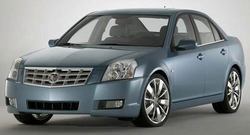
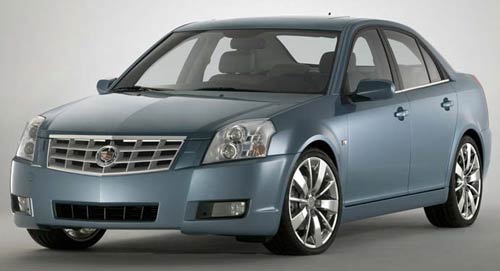
    Cadillacblsfront Specially meant for Europe, here is the Cadillac BLS. Imitating the angular styling of the CTS, this compact sedan will offer diesel engines, a prerequisite for success in Europe.

    Guess what? Its 1.9 diesel unit is called JTD in Italy! Yes, this is the first Fiat-powered Cad’ ever: a remnant of the dead Fiat-GM alliance. This is far from being a bad bet, since Fiat’s know-how in terms of common-rail technology is world widely acknowledged.

    Another interesting point: the platform of this new Cadillac is called “Premium”. Does it ring a bell? To me, yes: this is the name given to another platform: the Alfa 159’s! No need to worry anyway: all these components are technologically excellent.

    Cadillac hopes to sell 20,000 copies a year of its new front-wheel-drive car, which will be available in Europe only. To achieve this goal, other engines will be offered: a 2.8 turbo diesel V6 and two turbocharged petrol engines, of respectively 2.0 and 2.8 litres.

    The American carmaker has not disclosed any horsepower rating yet, but promises the handling and ride will be among the best in class, relying on Mc Pherson front struts and a multilink rear suspension. Of course, the equipment list will match Cadillac’s standards, including a touch-screen operated DVD-based GPS system combined with a Bluetooth telephone.

    This is not too much to compete with the Audi A4, the Mercedes C-Class or the BMW 3-Series late 2005.