Author: yoann besnard

  • V12 for Connaught

    V12 for Connaught

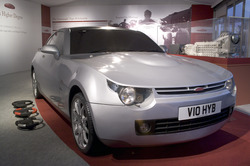
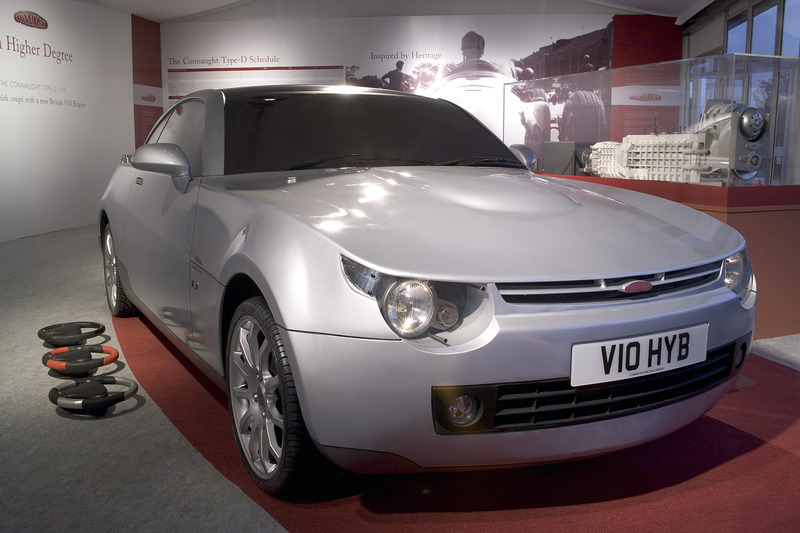
    Connaught03 If the United Kingdom has no carmakers, the country is at least full of dedicated craftsmen, who spend their lives designing and producing handmade cars. Even if life is harder since the EU passed stricter safety laws, there is a crop of new companies every year. This year the most important and original one is Connaught. Some craftsmen – such as Morgan – have produced the same car since the 1930s.

    Some companies – such as Noble – spend their time producing the best sports cars. Connaught chose to produce a sports car with an original V10 2 litre engine. Since the car was released to the press, engineers have gone back to work, done a feasibility study on the platform and concluded it was possible to stretch it by 4 inches. For Connaught, it’s an opportunity to build a new model. Connaught plans to launch a new sedan in 2010 which would be equipped with a V12. This V12 would be given a supercharger to develop 360 bhp.

    Source: Autocar

  • GL-Class: die Cayenne die!

    GL-Class: die Cayenne die!

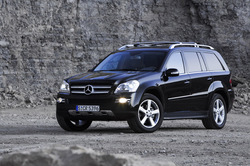
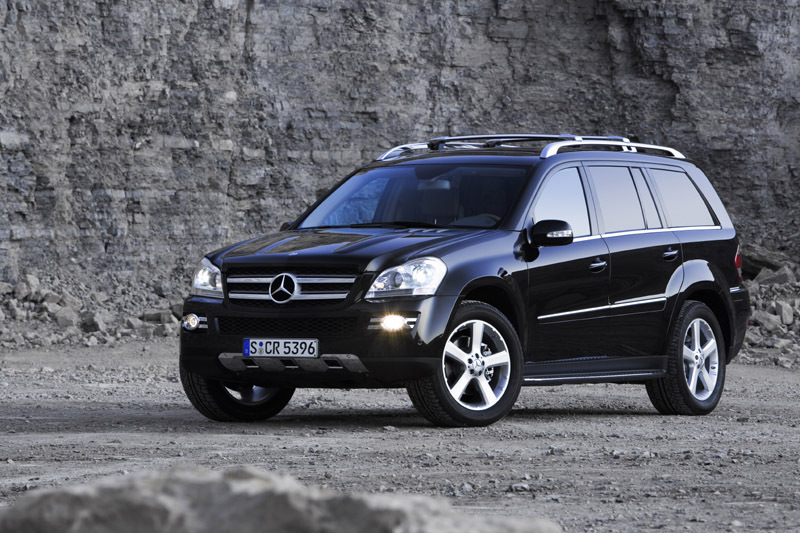
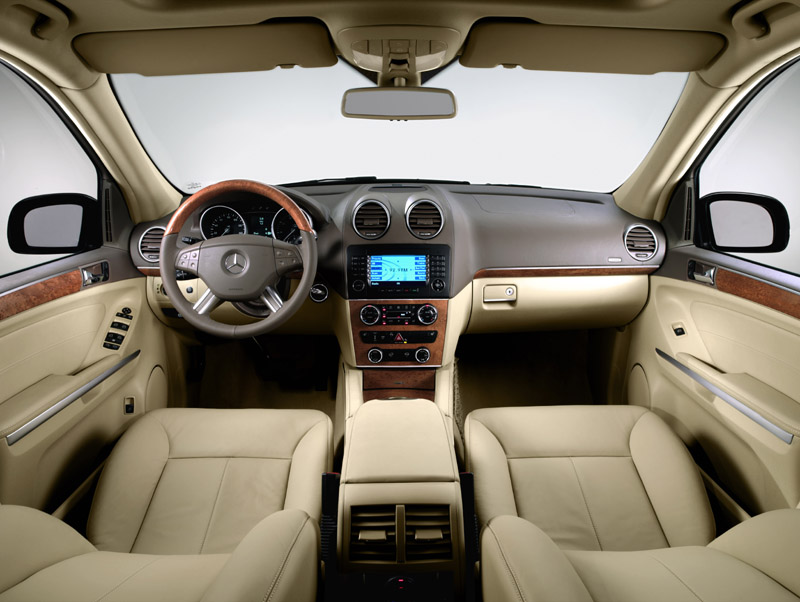
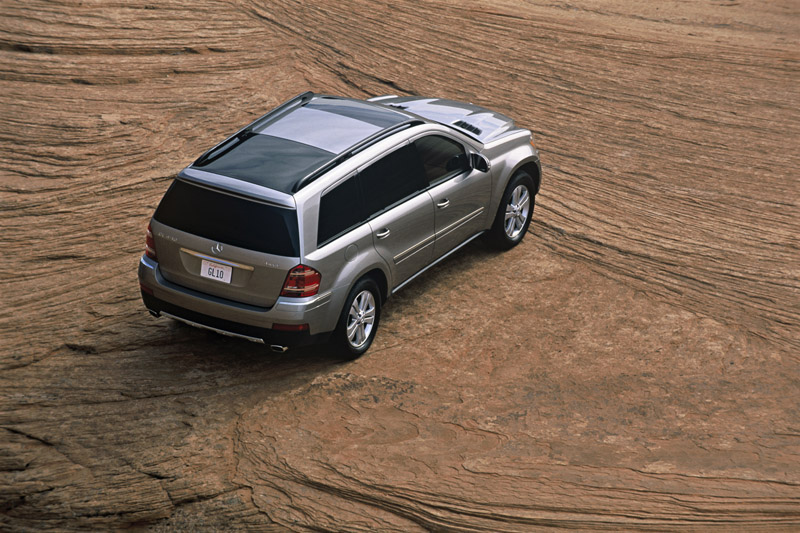
    97228005c4668_05The success of the Porsche Cayenne didn’t exactly please Mercedez-Benz. So the supervisory board decided to mix the R-Class and the M-Class and give birth to the new GL. Like the R-Class whose platform it uses, the GL is a bit closer to an Audi Q7 or Chevrolet Tahoe than a Porsche Cayenne: 200 inches long, 75.5 inches wide and 71.2 inches high. These dimensions can accomodate up to seven passengers at a level of comfort similar to the R-Class. Inside there is enough room for six Schwarzeneggers -a  measure of roominess on the American market-  but if you want more space  for the luggage compartment, the individual  rear seats can be stowed -of course- at the push of a button, either individually or in tandem to  provide a capacity of 1240 litres. If you need more capacity, you can still the second row of seats to reach 2300 litres.

    97217005a5174From the M-Class, it borrows the familiar SUV look (but boxier in order to be reminiscent of the G-Class) and a system derived from the 4Matic coupled with the family air suspension, Airmatic. With the G-Class badge, the GL off-road performances are under pressure. The G-Class was ugly but it was the best when you needed to drive in the mud. With its wheelbase of 120.8 inches, even with the help of the Airmatic suspension, some off-road sections might prove difficult to pass in a GL. But when we know that almost none of the SUV drivers ever use it outside the cities, it’s a minor detail.

    If you want to compete with the Audi Q7 or Porsche Cayenne – the American SUVs are out of the race – you need powerful engines. Mercedes offers 4 engines, two V8 gasolines, one V6 and one V8 diesels. The top of the range labeled GL 500 is equipped with the V8 5.5 litre from the S-Class which develops 388 bhp whereas the second V8 unit is a new engine derived from the 5.5 litre which has a cylinder unit of 4.6 litre and develops 340 bhp. Diesel units are the same type, big and full of torque: alongside the V6 labeled GL 320 CDI of 224 bhp, a 4.0 litre V8 is available with an output of 306 bhp and an impressive torque of 516 Lb-Ft.

    97215705a5147

  • Hyundai Accent Hybrid

    Hyundai Accent Hybrid

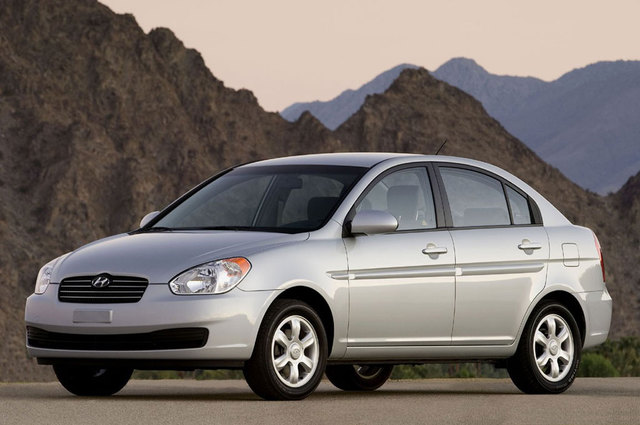
    Hyundai_accentIt’s a big step for the Hybrid technology. Hyunday unveiled last week at the Guangzhou Motor Show a hybrid version of its Accent, The vehicle is equipped with a 1.4L CVVT engine producing 90 hp and a 16-hp electric motor. According to the Korean manufacturer that should net the car a 44 percent gain in fuel economy.

    Beyond these figures which must be confirmed by independent tests, it’s the move taken by Hyundai. Whereas Toyota began to sell its hybrid technology integrated in a dedicated vehicle, the Prius and after a range of luxury limousines and SUV, Hyundai expects to sell its first hybrid under its best seller, the Accent. Thus, the 500,000 figures reached in 7 years could take less for Hyundai, especially if Hyundai sells the Accent in the US as it’s expected.

    It’s all the more dangerous for the European manufacturers since there is no real plan for hybrid technologies. A Hyundai Accent sold in Europe could get some rebates from new anti-pollution laws and be sold cheaper than its European competitors.

  • Happy birthday Butzi!

    Happy birthday Butzi!

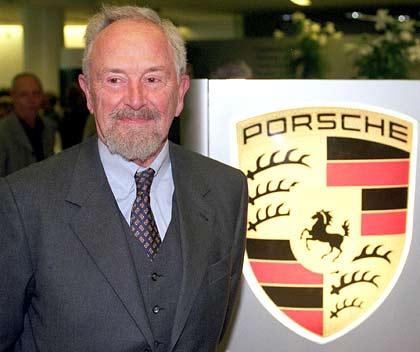
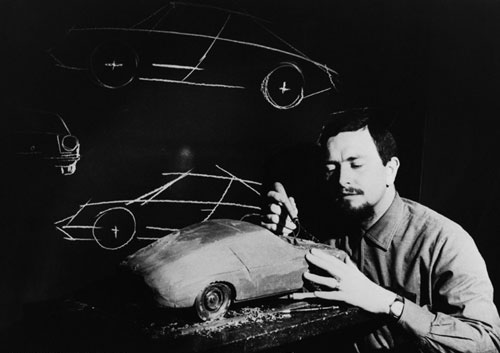
    Butziporsche_1Butzi celebrated his 70th birthday yesterday. Why should this be noteworthy when he’s neither the first nor the last to celebrate his 70th birthday? As he retired from all professional involvement in the past few months, it’s an opportunity to look back over a career dominated by the Porsche 911.

    1015Whereas his grandfather, Ferdinand and his father, Ferry were both engineers, Butzi was the first member of the Porsche family to attend courses at Ulm School of Design. This apprenticeship had a deep influence on the young Butzi. At that time in order to emphasize continuity with its pre-war pre-eminence in progressive modern design with the Bauhaus, Germany developed a simple, functionalist style which embraced both cars and household goods. Ferdinand uses the “ form following function “ concept in all his designs as he says himself: “ Design must be functional and functionality must be translated into visual aesthetics, without any reliance on gimmicks that have to be explained. “

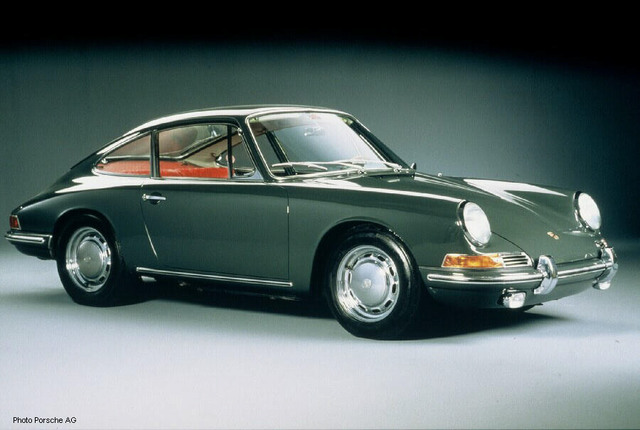
    9111964 After his graduation, he worked under the influence of Erwin Komenda, the engineer who had designed all Porsches since the beginning of the 1930s. His talent emerged with the 911 project. Porsche wanted to replace the 356. Heinrich Kie -who created the modeling department in 1951- was in charge of the project with the help of the American stylist Albert Goetz. Butzi who was happy to come to the office with his father when he was a small boy was going to give the best gift to Porsche: a legend. Thanks to his success he was promoted head of the design studio in 1962 but was be obliged to quit ten years later after a family’s dispute.

    Enthusiastic, he creates his own studio “Porsche Design”and like Rieter Rams at Braun he applied the Neo-Bauhaus style to a wide range of products from pens to watches sold under the Porsche brand. Coming back to the supervisory board in the 1990s, he founded a new company with the help of Porsche and some Porsche Design shareholders. The aim of this new company was to pursue the Porsche Design mission with the help of Porsche.

  • Automotive atrocities : Bond Bug

    Automotive atrocities : Bond Bug

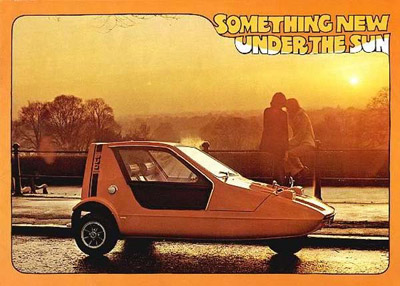
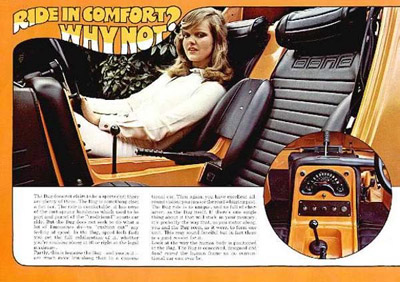
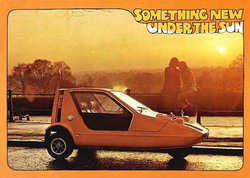
    Bondbugbrochure1_1The Bond Bug could be the automobile equivalent of Cheddar.  It is the colour of Cheddar, it resembles a car just like Cheddar resembles cheese, but its three wheels make you doubt it from the start just like the initial tasting of Cheddar makes you regret the experiment.

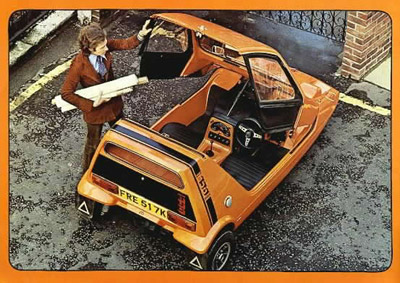
    The Bug is the fruit of a team of men who aim to marry the best of two car manufacturers. On my left, the British manufacturer Bond with the heterogeneous catalogue which ranged from the jet ski to the three wheeled car while also including 2 litres coupes with the evocative name of "Bombshell". Bondbugbrochure3On my right the other British craftsman of the three wheeled car, Reliant, which purchased the first one in 1969. The power taken by Reliant predicted the worst and the inconceivable happened.  In a stroke of genius, they decided to design a three wheeled car in the spirit of the late Bombshell coupes. In order to be ‘hip’, they asked the famous Ogle studio to design the new car, and the studio did its best to draw an inimitable car.
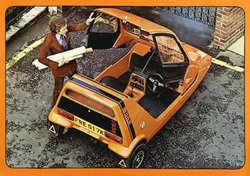
    The distinguishing feature of the Bug was that it was available in a single colour, orange, which enhanced a slender shape where aesthetic research and economy dominated: the originally retractable headlights for aesthetic concerns became fixed for accounting concerns; the cockpit opened completely conferring on all drives a space mission ambiance while the doors were out of plastic to reduce the cost; finally, the optional black stripes on the side pillars conferring on Bug its sporting character completed the piece of work.
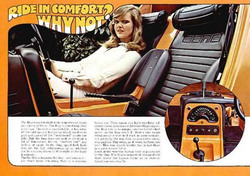
    Bondbugbrochure2All this work with an unanticipated result was nothing compared with handling of the Bug. The problem was that this bug was lighter than an insect and the addition of the driver in the equation transformed the handling in an amusing way.  Numbers of driver tried to improve this by installing a sand bag in the trunk, but the operation caused the unexpected effect of the front wheel lifting off the ground. With those inimitable qualities and a high price, one will understand well that the Bug had some difficulties in meeting with success, something which surprised the optimistic managers who had built more than 350 units in anticipation. This failure announced the end for Bond, but not for Bug, which continued its career at Reliant and found nearly 2 500 owners during its five years of production.
  • BMW Z4 Coupe

    BMW Z4 Coupe

    Bmw_z4_ouvrant_1

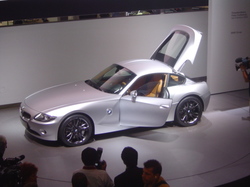
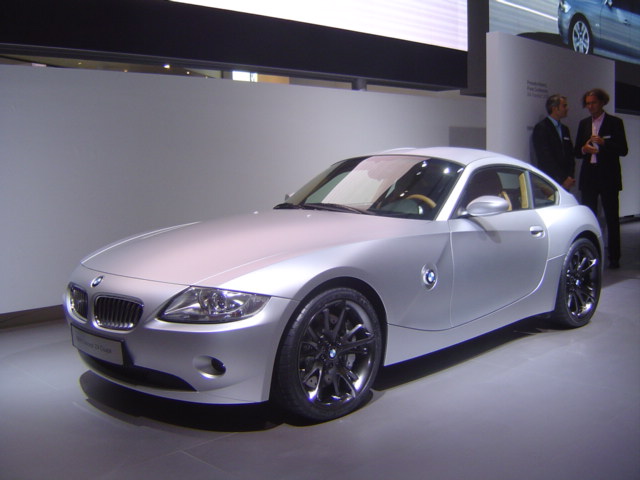
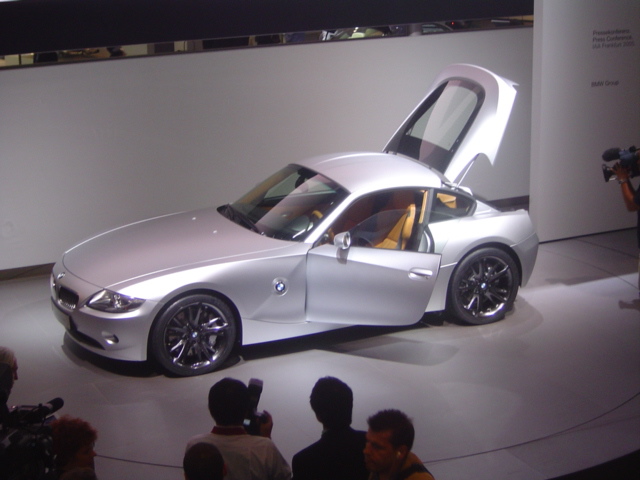
    This is BMW’s answer to the Nissan 350Z and Porsche Cayman, a coupe version of the Z4 roadster. That’s what BMW wants us to believe because the collapsing sales of the “flame surfacing” roadster tell a different story. Its sales are so far from the forecasts that it could become uneconomical to produce. From 56,000 sales in 2003, it dropped to 34,000 in 2004 and some insiders say the first six months of this year sales have declined by another 30 percent. Although it is displayed as a concept-car at the Frankfurt Motor Show at the same time as Porsche presents the Cayman, this coupe will go into production next year.

    Bmw_z4_coupe_1 The bodywork of the Z4 is nearly unchanged – including the door and the nose – in order to reduce the development cost of the new model, like Porsche did with the Cayman. More elegant than the roadster, the coupe’s roofline blends into a high boot lid with an integrated spoiler. An interesting quirk: the rear upper body lifts to access the boot. The interior from the roadster is unchanged but is the concept-car blends brown leather with aluminium door inserts and dashboard controls.

    The coupe will be powered  by the 3.0-litre straight six, 261 bhp and 232 lb ft whereas sources says it could also be powered by the V8, 400 bhp, from the future M3.

  • Maserati RIP

    Img03popI’m still shocked. The next Maseratis will share their platform with the Alfa Romeos because it’s time for Fiat to make bigger profit with this brand. If the perfectly good Coupe and the charming Quattroporte can’t save this company, then rebadged Alfas certainly won’t. Maseratis will be cheaper? Then they’re not Maseratis. Maseratis should use transverse engines and four-wheel drive, because it provides the best technical solution? Sounds familiar. Ford did the same with Jaguar and we know what happened.
    The new Premium platform is great news for Alfa, especially as it gives bigger engined models the option of four wheel-drive. However Maserati has a tradition of building GTs and moving the Italian Aston Martin down is about one of the worst ideas I have ever heard.
    The truth is the Premium platform has been forced on Maserati by another company, which had, in turn, been forced to use it. Engineers of both companies want front longitudinal engines and rear-wheel drive, and so we want them. Why is this so difficult for management to grasp?
    Fiat, if you continue to reduce your luxury names to brands and badges then you surely will reap your just rewards: zero sales. At least let Maserati die with dignity. Close the plant, save some money and put some decent investment into Lancia, which has nowhere to go but up.

  • Automotive atrocities : AMC Pacer

    Automotive atrocities : AMC Pacer

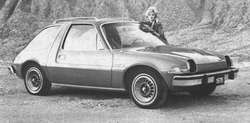
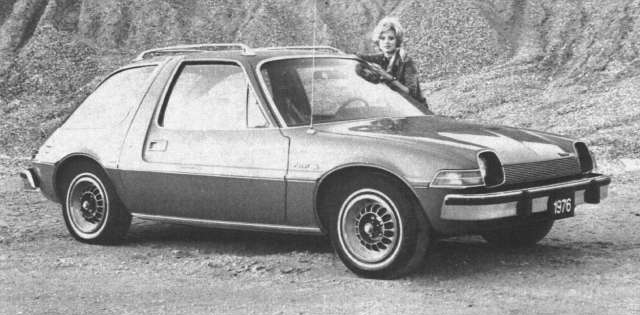
    Pacdl76_2AMC Pacer is the iconic car of the 70s, which defines the era even more than a Bee Gees track or the Farrah Fawcet hairstyle. In fact, dressing as Farrah Fawcet and listening to a Bee Gees track while driving a Pacer with wood panels to go to your job was perhaps the ultimate 70s experience.

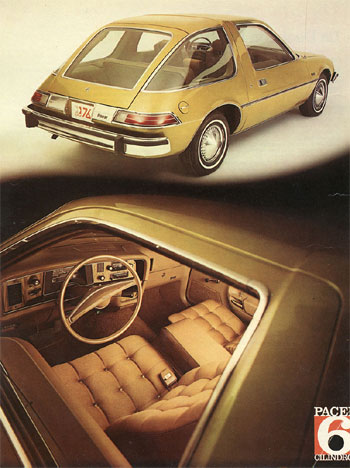
    Pacer76y_2AMC had intended great things for the Pacer. It was supposed to have been powered by a small rotary engine rather than a conventional, heavy, fuel-thirsty piston engine tied into a compact front wheel drive to save weight and allow for the maximization of interior space. The whole car was built around this idea. But AMC made the mistake of trusting General Motors to supply the rotary engine. At the last minute General Motors abruptly dropped the intended rotary engine and what was to have been the heart of the car was replaced by an in-line six engine that dated to the 50s. As a result the only thing modern or innovative about the car when it hit the showroom was its original bodywork. Unusually, the passenger side door was four inches longer than the driver’s side door. Nearly 40 percent of the Pacer’s exterior surface was glass. This was a good idea for great visibility, but also let the sun bake the interior to infernal temperatures that caused early fissures and cracks in the dashboard and even with the expensive air conditioner option, the interior was not livable on summer days.
    Pacwg78_1Talking about an economic car is a heresy because the old in-line six with 90 HP had a hard life with the 3,500-pound Pacer. With great generosity, AMC provided a sporty option that delivered 95 HP. Later, the Pacer was equipped with no more than 125 horsepower thanks to a V8. Due to poor sales, AMC introduced a wagon but only 1,341 coupes and 305 wagons were sold the last year in 1980. Iconic car of the 70s, the Pacer is a symbol of the American automotive industry’s utter confusion in the face of new changes and competition from the Japanese.