Author: yoann besnard

  • Tata to unveil its low cost car in January

    Tata to unveil its low cost car in January

    Tata_logo_1
    While bidding for Jaguar and Land Rover, the Indian car maker is working hard to finish its low cost car. In the case of Tata, a normal model costs £5-6,000 so its budget car will be offered for less than £1,300.

    The small car will be officially unveiled at the New Delhi Motor Show next year and Tata executives have released some details about the car. On the inside it will be roomy enough for a six foot person and Tata has used more plastics to reduce weight. Secrecy surrounds the engine spec but RA Mashelkar, a nonexecutive director on Tata Motors’ board, told the AP that “It’s an eco-car with a 25km-per-litre mileage on petrol” which “meets every international standard and specification, including Euro-4 norms”. He also said thatthe car would offer perfromabce similar to the ubiquitous Maruti 800.

    Suzuki won’t directly answer Tata’s new car but will unveil its own low cost model at the same Motor Show.

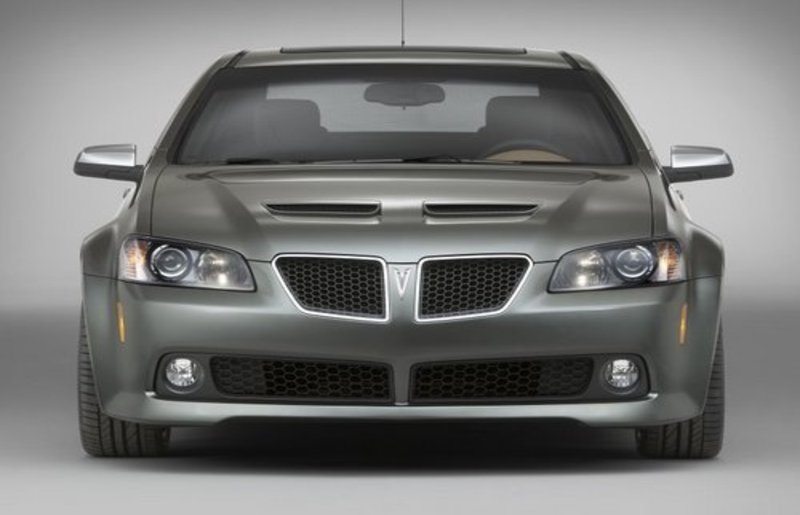
  • Holden started to build the Pontiac G8

    Holden started to build the Pontiac G8

    Gm_08g8_front
    Holden has started to roll out the G8 model off its production line which is good news for people eagerly-waiting the car to hit the showrooms. 620 vehicles will be built everyday and about half of it will leave the Australian soil.

    GM has been very precautions with the G8 saloon as it expects to sell roughly 50,000 cars per year. If there is not enough demand for it, the manufacturer will be able to shift production from the US to other markets where the Holden Commodore is sold. The saloon is labelled Chevrolet in Middle East, Vauxhall on our shores and Daewoo in Korea.

    In the US, the saloon will be available with a choice of two petrol engines, a 257bhp 3.6-litre V6 unit for the entry-level and a 357bhp V8 6.0-litre engine. The small engine is associated with a five speed automatic gearbox while the bigger unit gets a six speed automatic transmission. The V8 adopts the Active Fuel Management system which “turns off“ half of the cylinders under light-load conditions to improve fuel economy.

  • Toyota to develop safety systems for elderly people

    Toyota to develop safety systems for elderly people

    Brainage
    In a country where elderly people will represent more than 25%, car makers are focusing on those people considered as unfit to drive. The easy way would be to end their driving licence, but varied studies showed that this solution has a dramatic impact on their lives. So, it would be better to help them to drive better. Toyota has teamed up with an unusual partner, Professor Ryuta Kawashima, famous for creating the Nintendo’s “Brain Age“ games to develop new safety systems.

    Like Mercedes with its Attention Assist system, Toyota will work on systems identifying driving patterns to detect more easily dangerous behaviours. Another system would be to slow down the car if the driver put the brake on by accident. “Ultimately, we hope to develop cars that stimulate brain activity, so that driving itself becomes a form of brain training,“ Kawashima said.

    Kawashima had been approached by Nissan but Toyota finally won and should install the new technologies into new vehicles within five years.

  • Rendering: BMW 7-series

    Rendering: BMW 7-series

    Bmw7vjpg
    The next-generation BMW’s flagship will go on sale from 2009 and has been caught a few times under testing by soy photographers. Motorauthority has released speculative rendering of the future executive saloon.

    One does not expect a styling revolution as the current model did in 2001. This time, BMW doesn’t want to create a row over the design of the car and prefers to offer an evolution of the Flame surface design, denigrated at first and then acclaimed by almost everybody. As it has already been reported, the short and limousine bodies will be different. While the short wheelbase will feature a sporty design, the long wheelbase will get a more conservative and luxurious treatment.

    From 60,486 vehicles being sold in 2002, the 7-series has suffered a bit from the arrival of the Mercedes S-class. Last year only 49,771 units were sold. BMW hopes the next-generation will do better than the current model with a target of 65,000 vehicles by 2010. The German expects the German market to make a difference. Indeed, 5,710 7-series found an owner there last year while it hopes it will sell 11,000 cars by 2010.

    Click here to see all the pictures

    Source figures: CSM Worldwide

  • Video: Bugatti Veyron’s engine

    Video: Bugatti Veyron’s engine

    Bugatti_w16
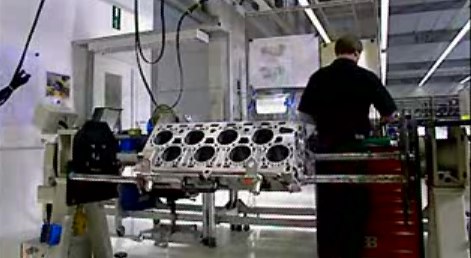
    Here is a video of the Bugatti Veryron’s engine, one of the most sophisticated engine currently in production being built on the small production line. Volkswagen engineers used all their expertise in building a unique engine. While common car makers use V10 or V12, they chose the option of a W16 boosted by four turbochargers.

  • Splinter, a new kind of supercar

    Splinter, a new kind of supercar

    Splinter_bois
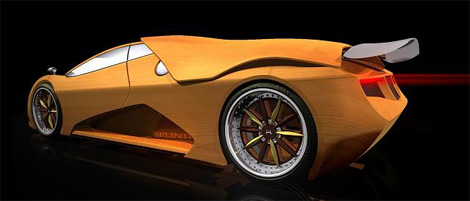
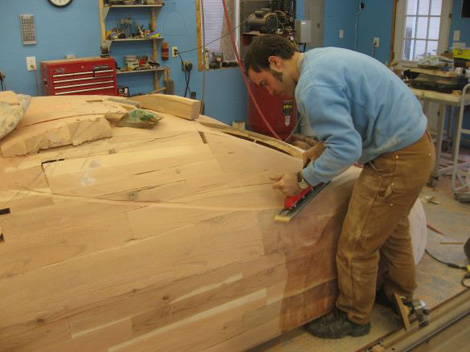
    Generally, supercar features carbon fiber material in order to save weight but it’s very expensive. So a group of students from North Carolina State University have had the idea to build a wooden supercar. Purpose is to explore the use of new materials in the automotive industry and you won’t remain stony-faced.

    Splinterhl
    Dubbed Splinter, the supercar features a wooden platform on which are assembled various components made in part of wood such as the suspension or the alloy wheels. The car is powered by a Cadillac Northstar V8 engine. With the help of two superchargers, it pumps out 600bhp. The team will have to solve the heating problem generated by the wooden body which should reflect the heat back to the engine.

  • The last Chrysler Crossfire rolled out of its factory

    The last Chrysler Crossfire rolled out of its factory

    06crossfiresrt6coupe01
    Chrysler announced a lit of vehicles the company would drop one month ago and the Crossfire model was one of them. The last Crossfire rolled out yesterday after a five year production and 80,000 units being built.

    Are we sad? Not really. The Crossfire was a Chrysler’s failure and the perfect illustration of the company’s German management. Instead of building specific products, Mercedes wanted Chrysler to build re-designed outgoing Mercedes model. The Crossfire was one of them. Based on the former SLK roadster, it failed in terms of performance but also in terms of design which never happened before to the company. Indeed, a model derived from a show car was always very close to the concept car but in the Crossfire case, the changes made to the original design created a coupé and roadster with a dubious front fascia which has nothing to do with the concept car.

    With the Crossfire being stopped, one does hope that the Dodge Demon Concept will get the green light. A production version of the concept car might become a hit as it was targeted as an affordable roadster set to compete with the MX-5. Unveiled at Geneva this year, it was powered by a 2.4-litre petrol engine with an output of 170bhp being hooked up to a six speed manual gearbox.

  • Honda to recall 43,000 Acura saloons

    Honda to recall 43,000 Acura saloons

    08_rltech_34front
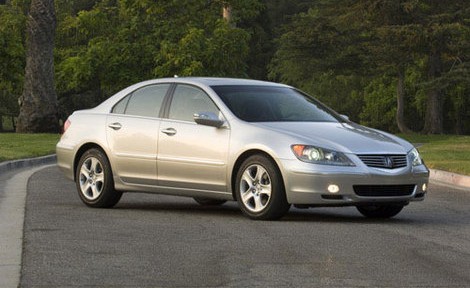
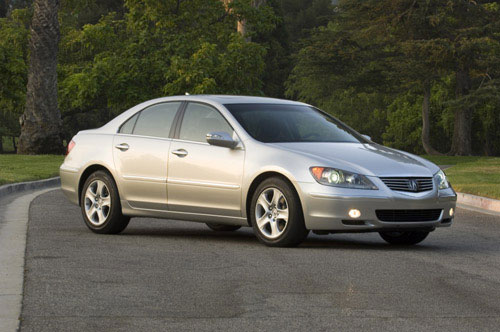
    The Japanese car maker has announced that it will recall 43,000 Acura RL saloons to fix a faulty power steering hose. The device could crack and lead to fluid leaking onto the catalytic converter possibly resulting in a fire.

    The recall affects cars built between 2004 and this year, that’s to say 2005-2008 models. No injuries or fires have been reported as of yet. The Acura RL is a re-badged Honda Legend for the American market, which means that Honda might also recall the Legend in Europe to fix the same problem if the Acura RL and Honda Legend share this component. Wait and see.

    For Honda, this is second time this year the company recalls a model. Earlier it recalls 182,756 Civic saloons in order to fix a faulty wheel bearing that could cause the wheel to fall off.

  • More details about the next McLaren Supercar

    More details about the next McLaren Supercar

    Mclaren
    Developed with Mercedes, the SLR can be considered as a failure for McLaren. Actually, the company fought fiercely to keep the weight down but Mercedes pressure made the SLR to be a whale. But many people consider that the SLR damaged the British company’s brand image. With the future P11, it wants to at the top again like the F1 model was.

    Unlike the SLR, the P11 will be a mid-engined two-seater supercar and engineers will focus on weight reduction like the iconic F1 model. The car will be powered by a Mercedes petrol engine. Secrecy surrounds the exact spec although observers think it might be the AMG-sourced 6.3-litre V8 petrol unit which has an output of roughly 500bhp. Longer than an Audi TT but shorter than a R8, the supercar would feature a sporty interior in order to keep the overal weight below 1200 kg. combined with potential engine, the P11 would claim a weight/power ratio of 2.4kg/bhp. Tha car would top 200mph and would run the 0-62mph in less than 4 seconds.

    Indeed, McLaren wants to broaden the P11’s appeal and make a profit by selling the supercar at a price tag estimated at £125,000. The car would compete with the F430 Scuderia and 911GT3.

    Source: Car Magazine

  • Volvo didn’t cancel the next-generation XC90

    Volvo didn’t cancel the next-generation XC90

    2007volvoxc90v8sportrearright
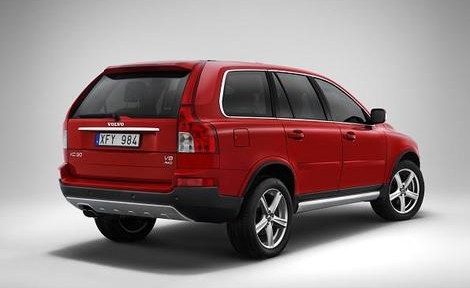
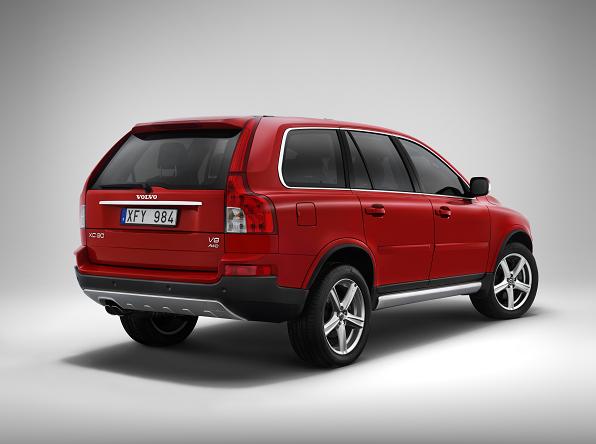
    Volvo has responded to Auto Motor and Sport Sweden about the cancellation of the next-generation XC90. The Swedish SUV will have a successor in 2012.

    In his statement, Volvo also said that it planned to face-lift the current model in 2009. It will be its second facelift after the first one doe in 2006. Who’s right or wrong is a difficult to answer. The magazine could have launched the rumours to boost its sales of course but Volvo could also lie. If public is aware of the cancellation of the next generation, it is sure the planned facelift will be a failure for the company as potential customers will want to get the SUV with a discount due to future poor re-sale value.

    Originally planned for 2009, the next-generation seems to cause headaches to Volvo’s executives. The recent change in emission regulations and public awareness of environment issues don’t really match with the XC90. Despite not being a huge SUV, it was more an opportunity for Volvo to jump on a marketing trend than a real thinking exercise as for its environmental credentials.

    Future will soon say what Volvo decided to do with the next-generation XC90.