Category: Industry News

  • Iran_Khodro’s global car to be launched in 2011

    Iran_Khodro’s global car to be launched in 2011

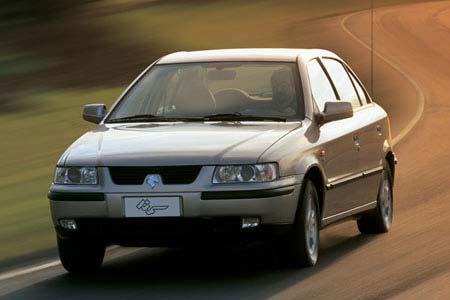
    Iran_khodro_samandIn an interview with Reuters, Iran_Khodro’s CEO Manouchehr Manteghi said that the car will be finance by Muslim countries and built in three countries, Iran of course, but also Malaysia and Turkey, the only two other Muslim markets to have decent automotive industries.

    Proton CEO Syed Zainal Abidin Syed Mohamed Tahir had said in an interview in November that the future car would feature specific Islamic equipments but Iran_Khodro CEO said such features were not planned as the car is expected to be sold worldwide. However he added that each country will be able to add its own equipment.
    At this stage, details remain scarce but the car will sold at a price tag between £4,300 and £5,700. and will target markets in Africa, the Middle East and southeast Asia.

    The original idea might sound a bit ridiculous and too much political but with a market of 1.1-1.8 billion Muslims, the effort mustn’t be ignored and the case followed with interest.

  • Next British International Motor Show plans to welcome 550,000 visitors

    Next British International Motor Show plans to welcome 550,000 visitors

    2008_british_international_motor_sh
    The first British International Motor Show in 2006 was a milestone for the UK as it was the first time that a British show has had a worldwide stature for a long time. Thanks to the launch of the Opel/Vauxhall Corsa, the show got a good press coverage and succeeded in attracting 415,000 visitors.

    For the second opus, the organiser plans to attract 550,000 visitors thanks to a bunch of expected world premiere. At this stage, it is still difficult which car maker will take the opportunity to unveil new models although it is confirmed that GM Europe will come with the future Opel/Vauxhall Insignia and the eagerly awaited Saab 9-1 prototype.

    Let’s hope that next year, Porsche and Volkswagen will have the decency to come as they ignored the 2006 show pretending it had a poor worldwide appeal. It’s true that 550,000 visitors don’t compare well with the 1.5 million figure recorded by the Paris Motor Show, but it’s the perfect show to be noticed.

  • November sales for the French market

    November sales for the French market

    20706040031m
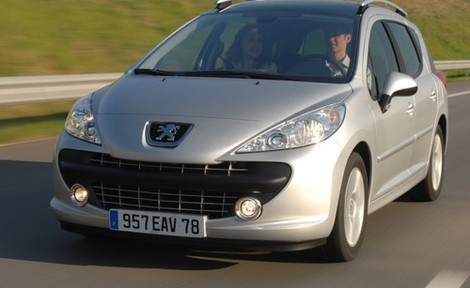
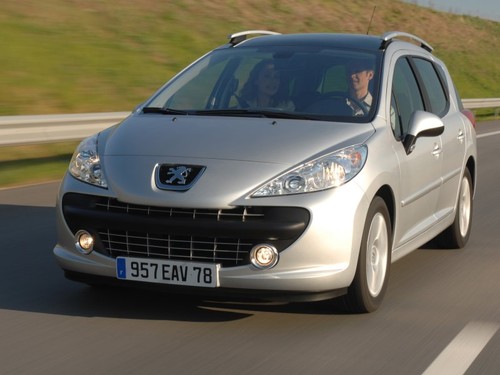
    Once again the 207 topped the French chart for November with 10,307 vehicles delivered. The Renault Clio III ranks second while the Citroen C4 Picasso finished third. Renault delivered 8,915 vehicles. The detailed statistics reveals that the 207 alone scored 7,858 but once the SW and the CC models added, the small French car’s sales increase by 31%. When the Renault Clio III estate hits the showroom, the overall range will likely overtake the 207. The third position is very good news for Citroen as the compact MPV overtakes the ubiquitous Renault Scenic for the first time with 8,577 vehicles for the former and 6,725 for the latter.

    Among imported cars, the Volkswagen Golf ranks first and arrives at the ninth position in the market thanks to a 14.5% increase to 3,641 vehicles. Niche models performs well as the new Mini arrives thirty-second with 1,599 vehicles and the iconic Fiat 500 takes the forty-fifth rank with 1,189 vehicles just four months after its launch. Oddly, the former Clio II scores better than newer foreing rivals as the small car launched in 1998 has been sold at 2,089 units.

    Among the new models, the Renault Laguna III doubled its sales over the previous month with 3,418 vehicles and is ahead of the Peugeot 407 whose sales decreased by 40%. The future C5 officially launched in next January will likely be a tough contender and might threaten the 407.

  • Toyota wants to save £1.3 billion annually

    Toyota wants to save £1.3 billion annually

    Toyota_corolla_le_2008_exterior_gri
    Volkswagen wants to catch up with Toyota in 2018, but the Japanese is determined to rest on his laurels. Toyota CEO Katsuaki Watanabe wants the company to save £300 billion/£1.3 billion annually.

    Toyota has targeted cost reduction as an essential contributor to a sustained 10% operating profit margin while it nearly reached this target last year with 9.3%. Dubbed “VI” for Value Innovation, the new cost saving strategy will focus on lumping components into modules or systems. The first car to The first car to incorporate the new scheme will be the Crown saloon expected to be launched on February 18 next year. Volkswagen also plans to use the strategy to cut cost.

    The Japanese carmaker had already realised a similar plan under the leadership of Watanabe when he was Toyota’s purchasing director. called CCC21 for Construction of Cost Competitiveness in the 21st Century, it achieved £4.5 billion of cost savings over five years.

    In the meantime, Toyota plans to invest ¥1.5 trillion/£6.5 billion in future models and production facilities. It’s less than the amount invested by Volkswagen, but still enough to give headaches to American carmakers.

  • First Tesla showroom to open soon

    First Tesla showroom to open soon

    Tesla_los_angeles
    Despite hectic news, Tesla Motors is moving ahead as it will open soon its first showroom located on the Santa Monica Boulevard.

    Known for getting one of the busiest traffic in the US, the address is also close to celebrities and environmentalists. Unlike Toyota who used a PR agency to promote the Prius among the celebrities, Tesla opened its first store where they live. Much clever and less expensive. Observers agree that the Tesla roadster is sexier than the Prius, of course.

  • Europe might become the largest automotive market

    Europe might become the largest automotive market

    228We regularly talk about the booming Indian and Chinese markets, but without hype Europe might become the world’s largest car market by the end of the year. The first rank is traditionally taken by the US.

    December sales will be crucial for the two markets as the US leads with 13,583,559 vehicles and Europe follows with 13,572,669 vehicles. Over the same period last year there was a gap of 740,000 vehicles.

    The European sales have increased thanks to the dynamic countries in Eastern and Central Europe, but traditional markets have also performed well especially the British and Italian markets. In the meantime, the downturn caused by the rising fuel costs and the subprime crisis have slowed down car sales in the US.

    Source: Automotive News

  • German battery could jump-start electric cars

    German battery could jump-start electric cars

    Litec
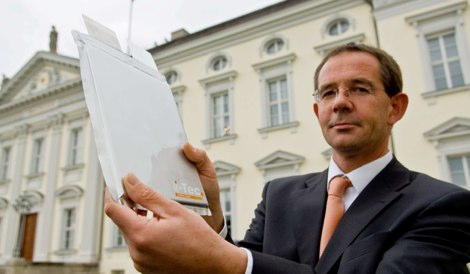
    A German company might have found the solution to the biggest problem encountered by current batteries: too large, overheating and limited power. Indeed, Li-Tec unveiled new batteries which “take up 30% less volume than those from Toyota“ and “allow you to go three times further for the same weight than French models, “ according to Li Tec director Tim Schaefer.

    This is an unusual bold statement but the German company received support from Bosch and Bosch’s spokeman didn’t hesitate to declare that the batteries were “a step towards totally electric cars.“ What differentiates the Li-Tec batteries from others is that the electrodes are separated by a flexible ceramic membrane which provides greater thermal stability. Overheating is a major problem encountered by current batteries. Toyota postponed the next-generation Prius due to overheating problems.

    Despite such an enthusiastic tone, the batteries are at an early stage and there is still a long path before producing the batteries at an industrial scale. Li-Tec has joined a consortium that includes Bosch, chemical giant BASF and German car maker Volkswagen to develop the product. German industry is determined to take the lead on batteries and electric cars. How will Toyota react?

    Source: li-tec.de

  • Martin Winterkorn plans to stay CEO until 2018

    Martin Winterkorn plans to stay CEO until 2018

    Winterkornpiech
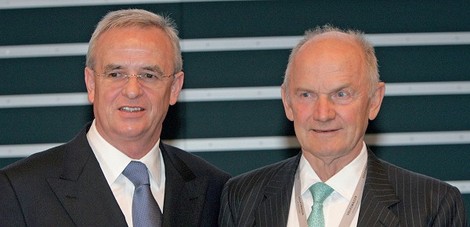
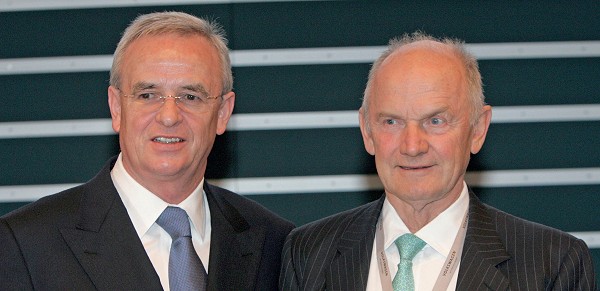
    In a recent interview Volkswagen group CEO Martin Winterkorn said that he planned to stay until the 2018 goal has been reached. In other words, he will leave his position only if Volkswagen catches up with Toyota or if the board fires him. He also said that he wants VW in 2010 to be where Toyota is today. It means that the group will have to sell 3.3 million more cars by 2010. Quite a challenge for the group!

    In order to achieve such an impressive target, Martin Winterkorn says the company will focus on improving its productivity by 10%. He revealed that each Toyota vehicle has a cost advantage of €3,000/2,155-4,000€/£2,875 over Volkswagen. Martin Winterkorn forgets to mention that the minimum wage -700€/£503 is lower in Japan than in Germany. it is also rumoured that Toyota employs Chinese and Korean workers who don’t require the Japanese company to provide health insurance. Beyond the Toyota production system, the Japanse social system might also help Toyota to build car at a lesser cost.

    Vokswagen CEO also said that German design and perfectionism will make the difference in overcoming Toyota. It is true that Toyota fails mainly on the design side as almost all Toyota cars features a dull styling, but Volkswagen models are not better, except for Audi.

    Volkswagen also plans to unveil more than 20 new models over the next three years and will invest £20 billion between 2008 and 2010 in product development and manufacturing.

  • Ford F-150 tops the chart in the US while exclusive cars bite the dust

    Ford F-150 tops the chart in the US while exclusive cars bite the dust

    07fordf150_05
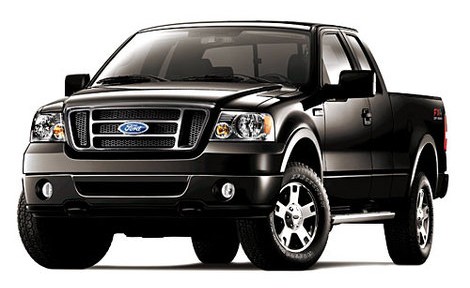
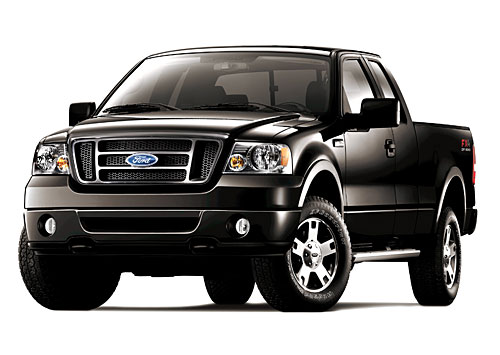
    The American magazine Forbes unveiled the list of the Best- and Worst-Selling Vehicles of 2007 over the first ten months. Once again, the Ford F-150 tops despite a sales slump of 12.5% due to high gas prices. The Forbes list also emphasizes the hold of Japanese car makers which have six cars in the list. The humiliation is even stronger for the American car makers as five Japanese models increased their sales.

    Among the worst sellers, you will find, of course, exclusive cars such as the Cadillac XLR but also cars at the end of their lifecycle like the Jaguar S-Type. Almost all listed cars recorded a sales slump due to the debt crisis occurring in the US.

    10 best-sellers in the US
    1. Ford F-Series: 588,952 units, -12.5%
    2. Chevrolet Silverado: 526,575, -2.4%
    3. Toyota Camry: 398,868, +6.4%
    4. Honda Accord: 332,815, +10.2%
    5. Toyota Corolla/Matrix: 317,796 -4.0%
    6. Honda Civic: 278,764, +2.2%
    7. Chevrolet Impala: 270,504, +12.6%
    8. Nissan Altima: 239,800, +26.6%
    9. Dodge Ram: 214,569, -9.3%
    10. Honda CR-V: 184,003, +34.9%

    10 worst-sellers in the US
    1. Cadillac XLR: 1,525, -42.7%
    2. Mazda B-Series: 2,363, -35.3%
    3. Isuzu Ascender: 2,523, -40.3%
    4. Jaguar X-Type: 2,599, -44.2%
    5. Jaguar S-Type: 2,973, -44.3%
    6. Audi A8/S8: 3,092, -27.2%
    7. Porsche Boxster: 3,148, -21.5%
    8. Lexus SC430: 3,311, -33.2%
    9. Isuzu i-290/370: 3,575, +21.1%
    10. Jaguar XJ: 3,637, -11.2%

  • Honda Fit/Jazz takes tops the sales chart in Japan

    Honda Fit/Jazz takes tops the sales chart in Japan

    2008_honda_fit_images_001
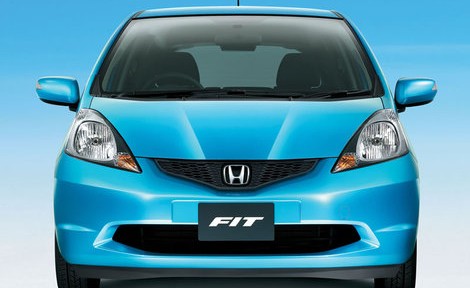
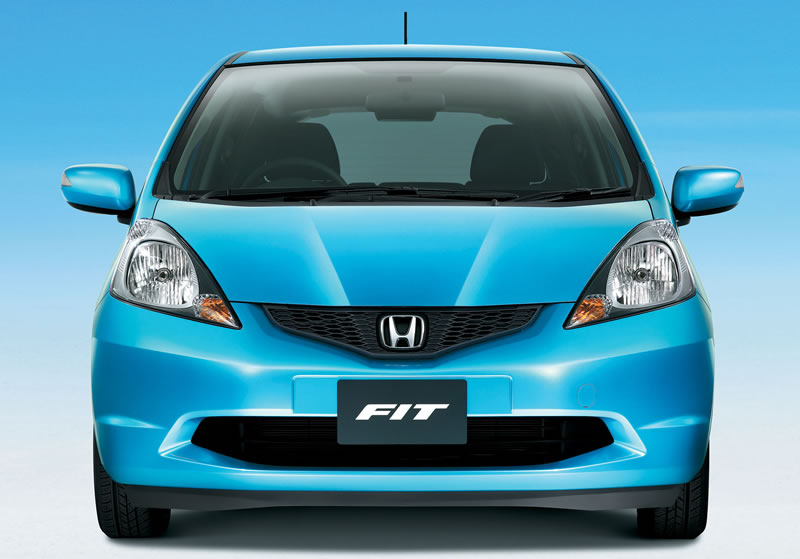
    After a successful launch, the new Honda Fit/Jazz shakes up the November sales chart in Japan by taking the first rank in front of the ubiquitous Toyota Corolla.

    In November, Honda Fit/Jazz’s sales have more than doubled over the same period last year while the Corolla’s sales slowed down by 10% last month. Some people might think it would worry Toyota, but the giant carmaker has 8 cars cracking the top ten. The other car maker to be in the top ten is Nissan.

    Is it a real good news for Honda? Yes, it is a good news as the Honda Fit is not especially a revolution compared to the previous model. It is also a sign that Japanese consumers favour cars with clever interior. But, it is also the Fit/Jazz’s good sales results are also worrying for the Japanese car makers. The Corolla is a compact model while the Fit/Jazz is a small car. In other words, Japanese consumers have less money and prefers to buy smaller and smarter cars than the larger classic sedans. It means thinner profit margins for Japanese car makers.