Blog

  • Mitsubishi Prototype-S at the next Geneva Motor Show

    Mitsubishi Prototype-S at the next Geneva Motor Show

    Mitsubishlancers
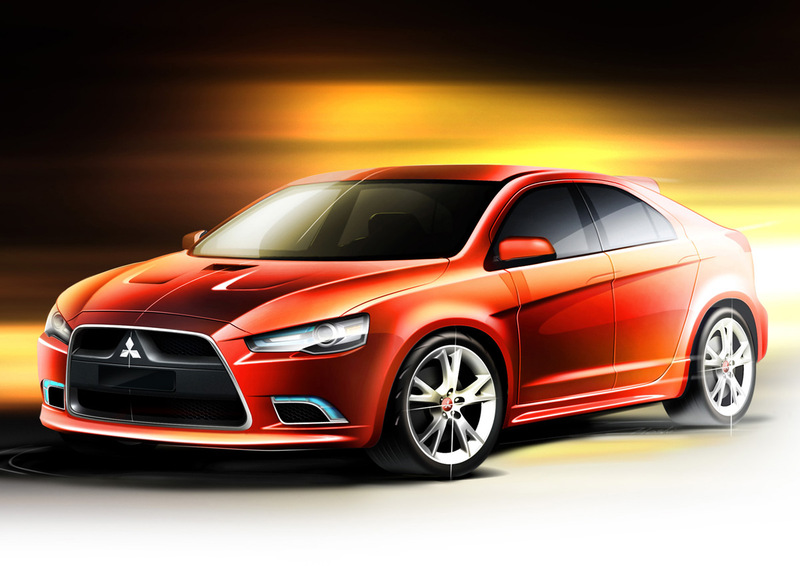
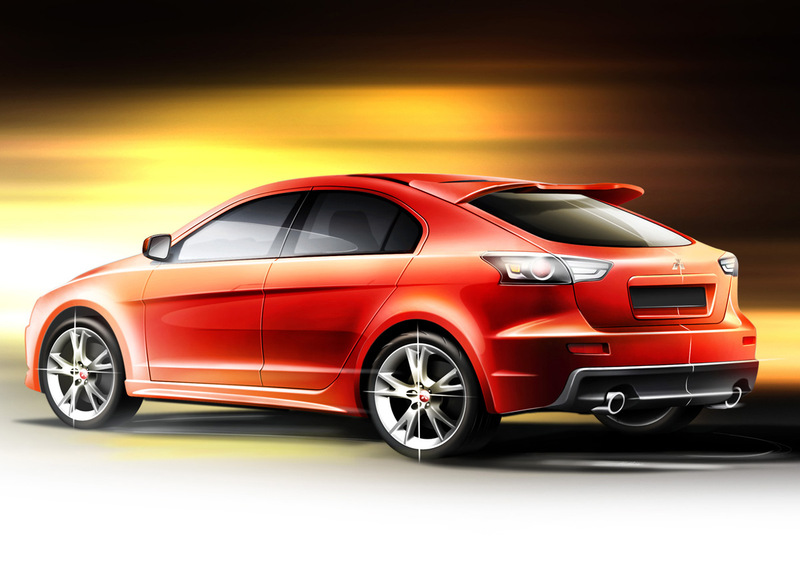
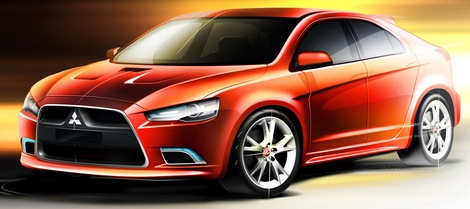
    Mitsubishi has announced it will unveil the Prototype-S at the next Geneva Motor Show. Derived from the Lancer, the concept car will take the of a hatchback intended to go on sale on the European market in the future.

    Lancer_sportback_s
    Despite being labelled as a concept car, the Prototype-S will be very close to the production model. Like the saloon, the hatchback takes its styling cues from the 2005 Concept-Sportback show car. Although the launch remains unknown, it is certain that a Lancer hatchback would help Mitsubishi to revamp its brand image on the European market.

    Lancer_sportback_s_2
    Under the bonnet, the Prototype-S comes with a 237bhp 2.0-litre petrol engine which is hooked up to the in-house automated manual transmission Twin Clutch SST.

  • Spyshots: Mercedes SL 65 Black Series

    Spyshots: Mercedes SL 65 Black Series

    Mercedesl65black
    If AMG has recently announced that the power war is over, the future SL 65 Black Series looks like a last-ditch stand. Indeed, the super-SL will likely be the most powerful Mercedes ever with an output of 670bhp.

    Set to compete with the Porsche 911 GT2 and the Lamborghini LP640, the SL 65 Black Series will shuttle from 0-60mph in 3.9 seconds and will have a top speed of 205mph. The staggering torque of 738lb-ft will be limited to a tiny 552 lb-ft on the first and second gears. In addition to an increase power, the engineers focus on weight reduction and according to the rumours the SL 65 Black Series will be 573 lbs lighter than the normal model.

    While being based on the SL model, the SL 65 Black Series won’t feature an open roof but a fixed-roof. It will also come with wider wings, 19in front and 20in rear wheels and stronger brakes.

    Due to be launched at the end of the year, the SL 65 Black Series will be officially unveiled at the next Paris Motor Show. It’s expected to cost around £195,000/€260,000 and Mercedes will build 400 of them.

    Source: Autoblog

  • Renault has unveiled the Twingo RS

    Renault has unveiled the Twingo RS

    15713_hd_ren2008twingors
    The car you see here is Renault’s serious attempt to spice up the Twingo model which looks a little tame compared to the iconic Fiat 500.

    15712_hd_ren2008twingors
    Set to compete with the future eagerly-awaited 500 Abarth and the Suzuki Swift Sport, the Twingo RS is powered by a 1.6-litre petrol engine which has an output of 133bhp. This is 33bhp more than the turbocharged 1.2-litre of the GT version. Unfortunately for Renault, the figures might not be enough to fight with the iconic Italian as it is believed that the 500 Abarth will offer 155bhp.

    15674_hd_ren2008twingors
    On the outside, the Twingo RS features extended front and rear wings, a rear spoiler and a lower front bumper. The interior styling will be unveiled at the Geneva Motor Show. One does hope that Renault has spice it up enough to compete with the future sporty 500.

    Also read: Spyshots: Renault Twingo RS

  • Lincoln wants to expand outside the U.S.

    Lincoln wants to expand outside the U.S.

    Lincolnmktconcept_04_hr
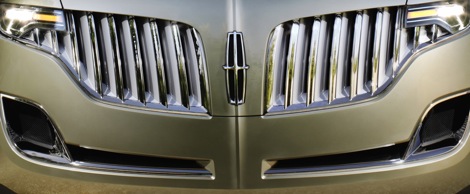
    Ford CEO Alan Mulally wants the group’s luxury brand to go offshore in an attempt to increase the company’s global sales. However, one does not expect to see the iconic brand reaching our shores.

    Indeed, Ford doesn’t want Lincoln to compete with the German clique, but would rather battle with the Japanese luxury brands such as Infiniti and Cadillac. On the western European market, Cadillac is struggling to increase its sales despite expanding its lineup with more European-sized vehicles. However the new CTS might change the order and become the first brand’s success. If Lincoln can’t compete in western Europe, it might find its way in Eastern Europe where Infiniti also plans to sell cars this year.

    In addition to the problems of brand image mentioned, Lincoln might also suffer from the lack of a rear-wheel drive platform. Ford has already planned to develop a rear-wheel drive model but it won’t hit the showrooms soon.

    Source: Auto Motor und Sport

  • Chrysler to adopt Mercedes engines for its small Diesel cars

    Chrysler to adopt Mercedes engines for its small Diesel cars

    Apcla3118
    In an interview with Auto,Motor und Sport magazine, Chrysler Executive Vice President – Product Development Frank O. Klegon revealed that the troubled American company will stop sourcing diesel engines from Volkswagen.

    In an attempt to consolidate its suppliers, the company won’t renew the contract which will shortly come to an end. Chrysler will source the engines to Mercedes with whom it wants to keep a close cooperation. “We will continue the good cooperation with Mercedes in the future, in the area of fuel cells, diesel engines and gasoline engine development, amongst other things. We will continue to use Mercedes’ developments in terms of electronics and advanced safety,“ he said.

    Chrysler is currently outsourcing its diesel engines from VM Motori, Mercedes and Volkswagen. VM Motori began its supply relationship with Chrysler in 1992, providing indirect injection engines for the Voyager. It produces the common-rail 2.5-litre and 2.8-litre diesel engines for the Chrysler Voyager and Grand Voyager, and the Jeep Cherokee. Mercedes provides the 3.0-litre diesel unit available on the Chrysler 300C, the Jeep Cherokee and Commander. Volkswagen supplies the lower range with the 138bhp 2.0-litre TDI engine on the Chrysler Sebring and the Jeep Compass. Last year Chrysler sourced 40,000 diesel engines from Volkswagen, around 43,000 from Mercedes and 55,000 from VM Motori.

  • Revamped Romanian first registration car tax to hurt Dacia

    Revamped Romanian first registration car tax to hurt Dacia

    7690_hd_ren2004dacialogan
    Dacia deputy chairman, Constantin Stroe, is fighting the Romanian government and the EU over the method used to calculate first registration tax. As a result of the future car tax, he is expecting the growth of the Romanian market to slow in 2008 and therefore foresees personnel cuts at Dacia.

    The Romanian government is currently handling talks with the European Union over the calculation method used for first registration tax. The tax was introduced as a means for the government to stop the inflow of used cars onto the Romanian market expected when the country joined the European Union last year. However, the EU pointed out that the tax is discriminatory and decided to start procedures regarding the infringement of the European Union Treaty.

    The Romanian government made some modifications to the calculation method in April 2007. According to these modifications the amount of the tax will fall with the growth of the age of the car, but European Union experts still considered the tax to be discriminatory, especially in regard to the taxation of imported and domestic second-hand cars. Last November, the European Union launched the second stage of the infringement procedure and Romania now has two months to comply with EU requirements.

    The current tax is applied the first time a car – either new or used – is registered in Romania. The amount levied is calculated based on the car’s age, engine capacity and emission output. Older, more polluting cars pay more. In the final variant due to be established at the end of January, the registration tax will be reduced by half for non-Euro vehicles over 20 years old, with a capacity of 1,600ccm, while for a car of 3001ccm, 15-16 years old, the tax will be reduced over three times. The tax remains unchanged for new Euro 4 compliant vehicles with a capacity of between 1,400 and 3,000ccm.

    Dacia is likely to be damaged by the revamped tax as it holds a market share of around 30% on the Romanian market. According to Dacia vice president Constantin Stroe, the tripling of the tax imposed on new cars and the decrease by up to ten times on taxes on non-Euro compliant cars may leave the doors of the Romanian market wide open to all the non-functional cars in Europe. He said in an interview for BBC that the number of old cars arriving in Romania after the new tax comes into force may reach 500,000 units, compared to 125,000 in 2007.

    This year, Automobile Dacia will hire 3,000 people at its assembly plant and 600 university graduates in its administrative departments in order to hit its production target of 400,000 cars in 2009. Should the tax be adopted and Dacia sales go down, the number of new employees will shrink in the following years.
  • Peugeot-Citroen to build a factory in Russia

    Peugeot-Citroen to build a factory in Russia

    P06182002
    Peugeot-Citroen has signed a contract with the Kaluga region’s government to build a factory which will produce 75,000 cars a year in 2010.

    The future factory will produce the Peugeot 207 and the Citroen C4 models. The company will invest £223 million for the construction of the plant and will create 2,600 jobs.

    The French group will join other car makers in the area such as Volkswagen and Mitsubishi. Due to be finished in 2009, the Volkswagen factory will produce the Passat, Touareg and Polo models at 115,000 units per year. Mitsubishi has also announced its intent to build an assembly plan in Kaluga with the initial annual production capacity of 50,000 cars.

  • Revamped Nissan Tiida unveiled

    Revamped Nissan Tiida unveiled

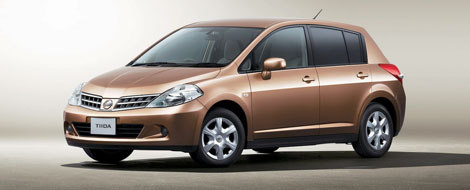
    Tiida_101_2
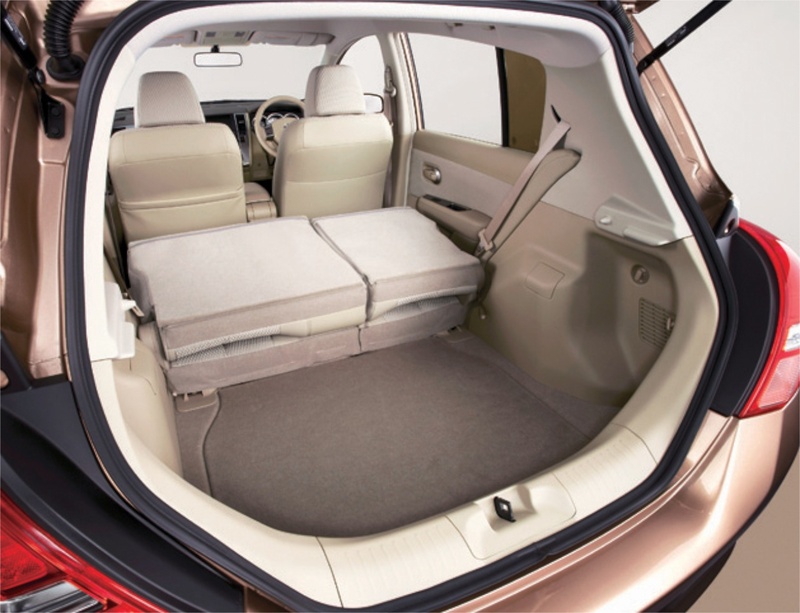
    Nissan has unveiled a facelifted Tiida four years after its first debut. The compact model features minor changes and includes a few technical updates.

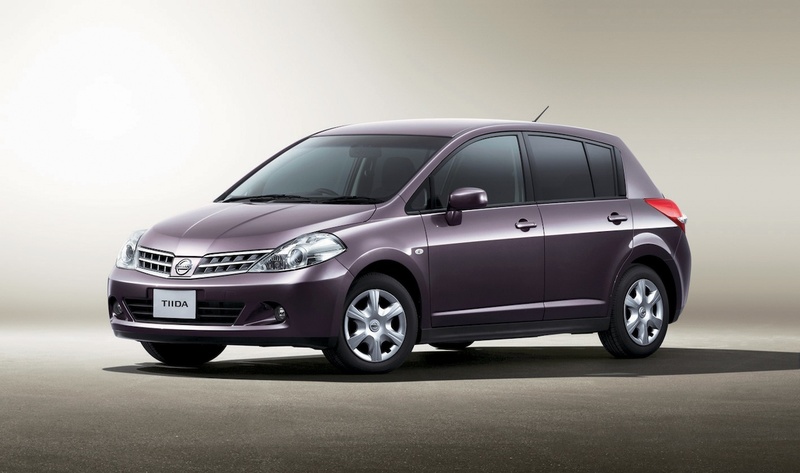
    Tiida_103
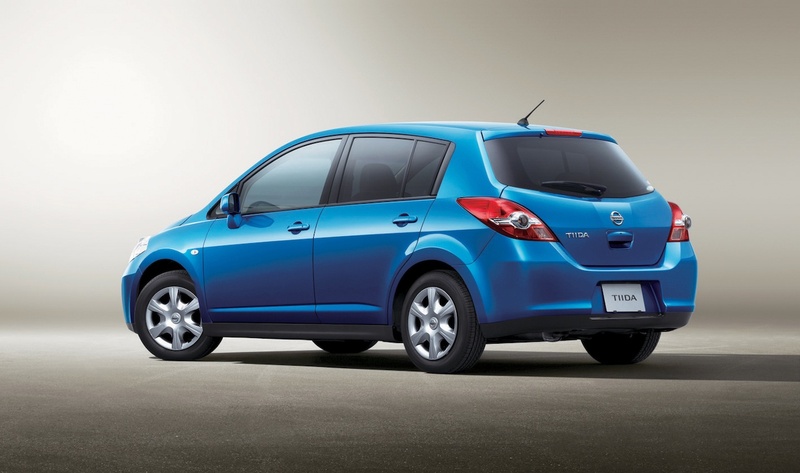
    The exterior styling includes new grilles, front bumpers and headlights at the front, and new taillights and a rear bumper at the rear end. Although better than the outgoing model, the Tiida still looks a little tame.

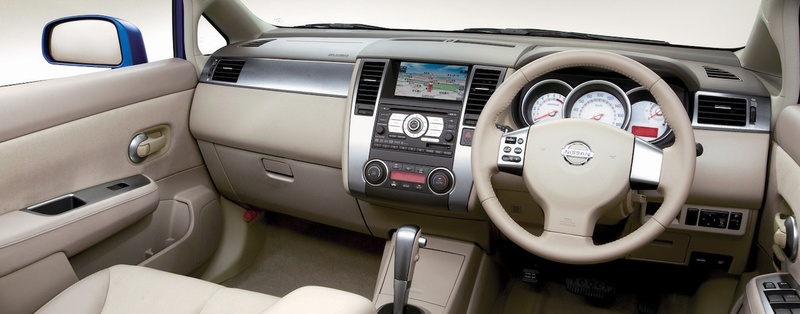
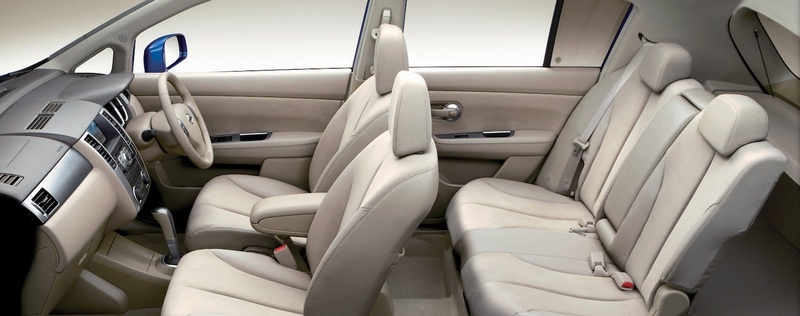
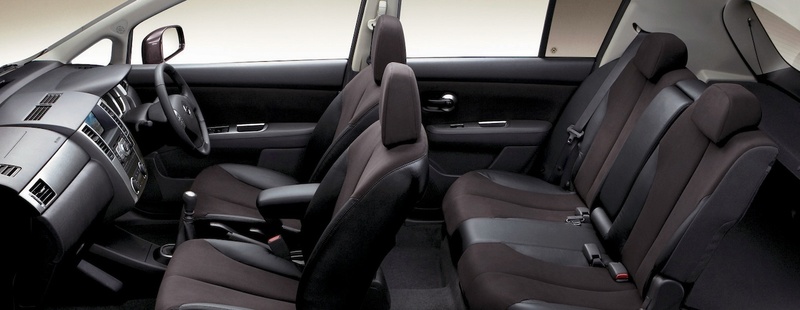
    Tiida_106Inside the car evolves more significantly with a revamped centre stack which features redesigned automatic air-conditioner controls similar to the Qashqai’s, and new illumination scheme, as well as new metallic-finish panels. There is also a new instrument cluster design which features new illumination colours changed to an orange hue and a fuel consumption display function.

    Tiida_119
    The Tiida is available with two engines, a 109bhp 1.5-litre petrol engine and a 128bhp 1.8-litre unit which are hooked up to a four-speed automatic gearbox as standard. From now on, the 1.8-litre engine can be associated with a six-speed manual gearbox while fuel economy has been improved on the in-house continuously variable transmission.

    Tiida_120
    Like every Japanese models on sale on its domestic markets, the range is quite complicated and the revamped Tiida offers no less than 22 versions.

    Tiida_115
    The entry model starts at ¥1,459,500/£6,900 and is powered by the 1.5 litre engine hooked up to the four-speed automatic transmission while the topping version, of course, powered by the 1.8-litre unit with the CVT transmission will cost ¥2,291,100/£10,800.

    Tiida_118

  • Nissan to launch a facelifted 350Z at the Paris Motor Show

    Nissan to launch a facelifted 350Z at the Paris Motor Show

    11885649010282846_015
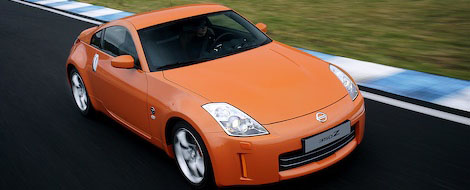
    Nissan will likely unveil a revised 350Z at the next Paris Motor Show which will feature the 3.7-litre petrol unit already seen on the Infiniti G37. The revamped Z would be called 370Z.

    The news doesn’t come as a surprise. Indeed, the two cars share the same platform and engine until this year when the Infiniti coupé was facelifted at 2007 New York International Auto Show.

    In the current 350Z, the V6 engine dubbed VQ35HR, has an output of 313bhp while the 3.7-litre unit pumps out 329bhp. The VQ37VHR has a higher compression ratio (11.0:1) than the VQ35HR and gains 2 ft·lbf (2.7 N·m) of torque at peak. Coming with the Nissan’s VVEL (Variable Valve Event and Lift) system, the 3.7-litre unit offers a more flattened torque curve all around by as much as 15%.

  • Lutz compared tthe Volt to the moon shot

    Lutz compared tthe Volt to the moon shot

    Naiascadillac02
    In an interview with Wired, the tanned straight talker Bob Lutz likened the Chevrolet Volt project to the moon shot that happened almost forty years ago.

    Due to be unveiled in November 2010, the Chevrolet Volt will be the first plug-in hybrid in the world but its development is not without stumbling blocks. Indeed, engineers struggle with aerodynamics and battery technologies. However, GM’s VP for Global Program Management John Lauckner declared that latest battery prototypes were “very encouraging.” Regarding the aerodynamics problems, Bob Lutz said that they had been resolved thanks to the new design.

    Nevertheless, some observers remain sceptical concerning the announced launch date. GM’s engineers have less than three years to solve current problems as well as the likely future difficulties involved in the production of such a new vehicle. The success of the future car also remains in doubt as Bob Lutz has recognized that the announced price of $30,000/£15,200 won’t be achievable. The first Chevrolet Volt may come closer to $40,000/£20,250. Indeed, the usual cost minimization won’t be made due to the close launch date.