Category: Industry News

  • Hillary Clinton promising green-collar jobs and green vehicle bonds

    Hillary Clinton promising green-collar jobs and green vehicle bonds

    Gmbaltimorehillary01
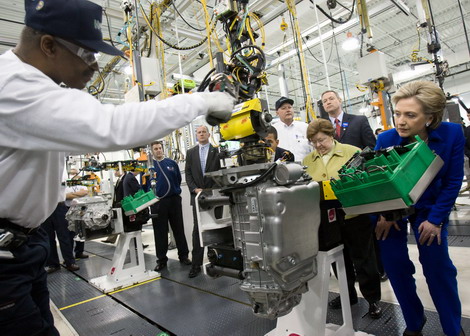
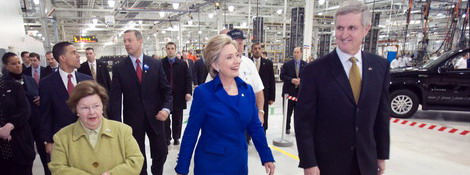
    Hillary Clinton yesterday toured a plant in Maryland that builds transmissions for GM’s full-size hybrid vehicles. The presidential candidate immediately began promoting her plan to create five million “green-collar” jobs.

    Gmbaltimorehillary02
    She pledged to give £2.5 billion to automakers for battery research, and provide £10 billion in “green vehicle bonds” for automakers wishing to renovate old factories, mainly American car makers. She also promised £5,000 in tax credits for buyers of plug-in hybrid.

    Gmbaltimorehillary03
    If Hillary Clinton is elected as the next president of the US, GM won’t have any excuse not to build efficient cars.

    Source: Detroit News

  • “Cars that can’t crash ” unveiled by Thatcham

    “Cars that can’t crash ” unveiled by Thatcham

    Citysafesystemillustration
    It sounds like a sci-fi fantasy – cars that can’t crash! But the fictional notion is about to become reality thanks to new technologies being fitted to vehicles driven in Britain – that in time could save more than 125,000 injuries each year.

    Low speed shunts and collisions make up no less than 75 percent of all motor accidents. So, collision avoidance systems seem to represent the future of accident and injury reduction on UK roads and Thatcham has been evaluating three different systems:

    The Volvo City Safety – which will be fitted as standard to their XC60 which will be on sale from November is the first system being tested. The system is active at up to 20 mph. It uses a form of laser radar (LIDAR) mounted in top of the windscreen. It is programmed to respond if the vehicle in front is either at a standstill or is moving in the same direction as the car itself. The brakes are pre-charged and should a collision be imminent it applies them and cuts the throttle. If the car is travelling below 10mph it should prevent the collision entirely and at a speed of up to 20 mph will reduce the impact by 50%.

    The second tested system is the Mercedes Distronic Plus currently available on some S-class models. It uses two radar systems linked to the car’s cruise control system to maintain a safe distance between you and the car in front. It provides a continual calculation of the distance between the vehicle in front and the speed differential between them and will bring the car to a complete stop if necessary.

    The third system is the Honda CMBS currently available on the CR-V. It is a radar system that again calculates the distance and the speed differential with the vehicle in front. Should this become out of kilter the driver receives visual and audible warnings before brakes are progressively activated. Seat belts are also tightened to alert the driver of an impending problem and lessen any resulting injuries.

    Matthew Avery, Thatcham Research Manager said “All three systems offer enhanced protection – the Volvo in particular impressed because of its autonomous operation and the fact that it intervened at the last second and can completely avoid a crash.” However Avery reminds us the basics of driving: “It is imperative that driver vigilance is not lowered by the inclusion of such systems in their vehicles. These systems should not allow the driver to compensate – and take additional risks. The car is not the driver – the driver drives the car.”

  • London to vote on the £25 congestion charge this week

    London to vote on the £25 congestion charge this week

    Londonstreetandtraffic
    This week London will vote for the £25 congestion charge that will be applied to “gas-guzzling” cars. The purpose of the new tax is to help cutting the city’s carbon emissions by 60 percent by 2025.

    Every owner of a vehicle emitting more than 225g CO2 per 100 km will have to pay the tax if he wants to drive in London. The original plan excluded London residents within the taxed zone, but the exemption has been removed for drivers of luxury and SUV cars.

    If the is passed, London will become part of the city’s larger green initiative, which includes promoting the use of bicycles in the city, fitting new filters to city equipment and buildings and the low-emission zone targeting heavy trucks, which went into effect on Monday in the zone encircled by the M25.

  • Pininfarina Sintesi to offer 700bhp

    Pininfarina Sintesi to offer 700bhp

    Pinifarina_sintesi_main02
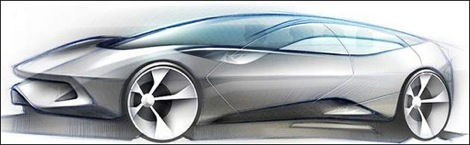
    Until now, the size of the engine and transmission to a major extent determines the shape of a car, but Pininfarina might perform a little revolution by unveiling the Sintesi concept car at Geneva.

    Engineers focused on developing a new fuel cell powertrain which can be spread out in the car. The Sintesi features the electric motors in the wheel while the fuel cell stacks are positioned on the vehicle frame. The central tunnel stores the tank for biofuel and a the device that transforms the biofuel into hydrogen. The Sintesi has a power output of 700bhp.

    Pininfarina developed the system with the help of a British company Nuvera Fuel Cells.

  • Caparo to help Tata to build the Nano

    Caparo to help Tata to build the Nano

    Tata1_interna
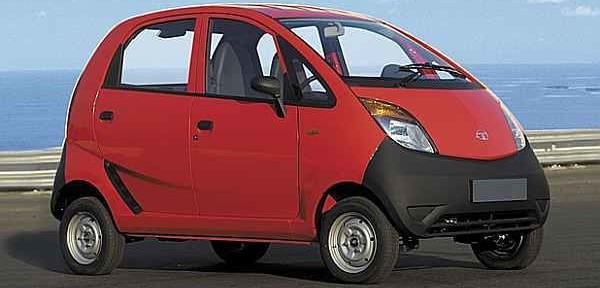
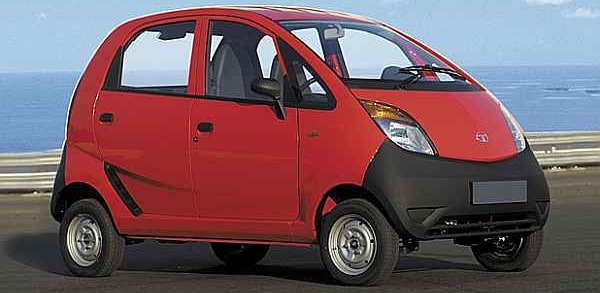
    Caparo likes the opposites. After building the supercar T1, the British company will build the body structure for the cheapest car in the world, the Tata Nano.

    Selected inner structural panels will be pressed and assembled by Caparo at a new facility in Singur which will supply 60 per cent of these assemblies, with the rest being manufactured in-house by Tata. To meet Tata’s ambitious cost targets, Caparo has installed a new semi-automated production line with zero fault forward quality control systems.

    “The body technology is relatively conventional, but the manufacturing technology is the result of very sophisticated analysis to ensure high-quality, low-cost production. We completed this extremely quickly to meet our customer’s deadline, with start of production just six months after the contract was confirmed, ” said Caparo Group CEO Angad Paul.

  • Reva to expand its lineup

    Reva to expand its lineup

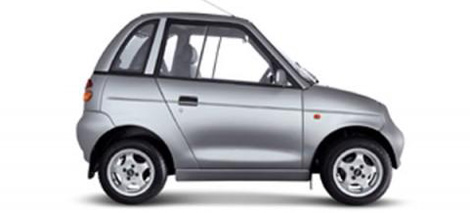
    Gwiz
    Reva has announced its plan to expand its line up by launching a new model every year from 2009.

    The Indian company has set the ambitious plan to conquer the electric world by expanding it lineup. Reva only sells one model, the G-Wiz. The company has recently opened a new factory which has a production capacity of 33,000 vehicles per year. The increased capacity will also enable the car maker to sell the car on more markets. After the UK, continental Europe will likely the next target for Reva.

    Reva’s deputy chairman and chief technology officer, Chetan Kumaar Maini also said that the future vehicles will come with “ a battery that can traverse wider distance.”

  • Fisker to build a Karma convertible

    Fisker to build a Karma convertible

    90802090011l
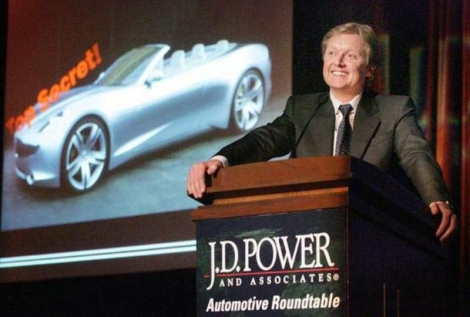
    At a J.D. Power event, Fisker founder Henrik Fisker has revealed the photo of a Karma convertible. The photo was marked with the label “top secret”.

    Henry Fisker has set the ambitious plan to develop a full line-up to become a small car maker still able to compete with the German clique on the plug-in hybrid segment. After the saloon unveiled at Detroit, Fisker will likely unveil the secret convertible. The company will go abroad next year by opening showrooms in Europe.

    Fisker outsource the technology side to a another company, Quantum Technologies which will build the powertrain. The engine is a small petrol engine turning a generator to top up the car’s lithium-ion battery pack, which in turn power an electric motor driving the wheel.

    The Fisker Karma can run the 0-60mph in just 6 seconds and can reach a top speed of 125mph. The saloon will offer a 50 miles range.

    Will Fisker succeed where GM and Tesla struggle?

  • West European market down by 0.9% in January

    West European market down by 0.9% in January

    03_015_14
    The West European car market dropped by 0.9% over the same period last year. France, Italy and Spain recorded the strongest fall.

    The Spanish market suffered from the new tax scheme and premium segment collapsed in January as customers bought luxury cars in December before the new car tax applies.

    The French market also followed a similar path. The new car tax penalized premium models, especially SUV models. Despite a weak January, experts expect the French market to grow by 1-2 percent this year.

    The Italian market also recorded a sales drop as economy is slowing. With the recent political events the market will likely go down the next months.

    The British market also fell by 2.1% and the ongoing effects of the credit crunch, a housing market slowdown and a general faltering of consumer confidence will likely weaken the 2008 sales.

    Among all those gloomy markets, Germany recorded a strong 10.6% over the same period last year; however, this good news can be explained by the expected new annual circulation tax that the german government will unveil in the middle of this year.

  • Diesel registrations jumped a further 10 per cent in the UK

    Diesel registrations jumped a further 10 per cent in the UK

    Trunk2
    If January sales for the British market fell by 2.1%, diesel registration increased by 10% over the same period last year, bringing the oil burner market share to 44.9%. This is the second highest-ever share.

    One can explain such a result by the economic turnaround which changes consumer behaviour. Instead of looking for power, “Fuel efficiency is a high priority for customers” said Paul Everitt, The Society of Motor Manufacturers and Traders (SMMT) chief executive.

    New car registrations got off to a slow start in 2008, falling by 2.1 per cent or 3,506 units. Dual purpose (4×4), executive, mini and MPV segments all posted growth in January, up 7.6, 14.3, 16.4, and 20.8 per cent respectively. Alternatively fuelled vehicles registrations were up 14.4 per cent to 1,280 units for the month. Lower medium vehicles saw the largest volume increase of 1,860 units or 3.7 per cent.

    Total registrations are expected to soften in 2008, but high fuel costs will see fuel efficiency a key consideration for new car buyers. This, and action on CO2 emissions, should mean that diesels’ market share will grow further.

    January is traditionally a good month for fleet sales, and the segment was up 0.2 per cent compared to January 2007, and took the largest share of the market at 56.1 per cent. Private and business registrations start 2008 on a slightly weaker note, down 5.3 and 3.1 per cent respectively. The fall in private sales is one of the main contributors to the dip in January’s total.

    The top 10 accounts for a third of January’s sales with the Ford Focus setting a firm hold on the top slot and confirming its nine year run at the top. Ford and Vauxhall remain the UK’s top selling marques, while Audi, BMW, Mercedes and Nissan all recorded significant growth. VW’s Golf was the best selling diesel, just ahead the Ford Focus
  • New Zealand sales hits a new record

    New Zealand sales hits a new record

    Adin20071013dsc8393carsstreetsmallh
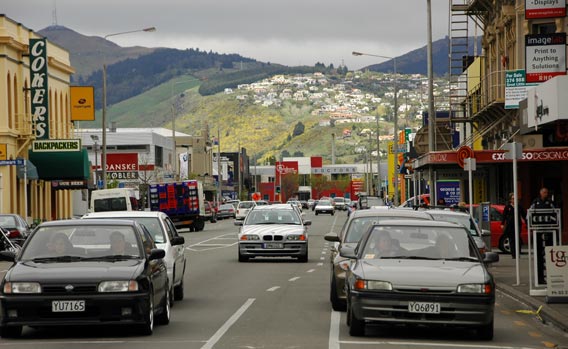
    New Zealand domestic market registered 9,399 vehicles over the same period last year. Toyota lead the market followed by Holden and Ford.

    If in Europe and in the US, the new vehicle markets are gloomy, the other side of the world, New Zealand, recorded a 11% increase over January 2007. Perry Kerr, CEO of the Motor Industry Association, said: “Not only was this the best January in the history of our industry, but it came after a particularly strong finish to the previous year.”

    The good January follows a great 2007 year. Sales of new vehicles in New Zealand last year cracked the 100,000 miletsone. The final figure of 102,468 was only 980 units behind the 16-year record set in 2005.